Clear controls, logical machine selection and practical daily operation for the people responsible for production.
Salvamac
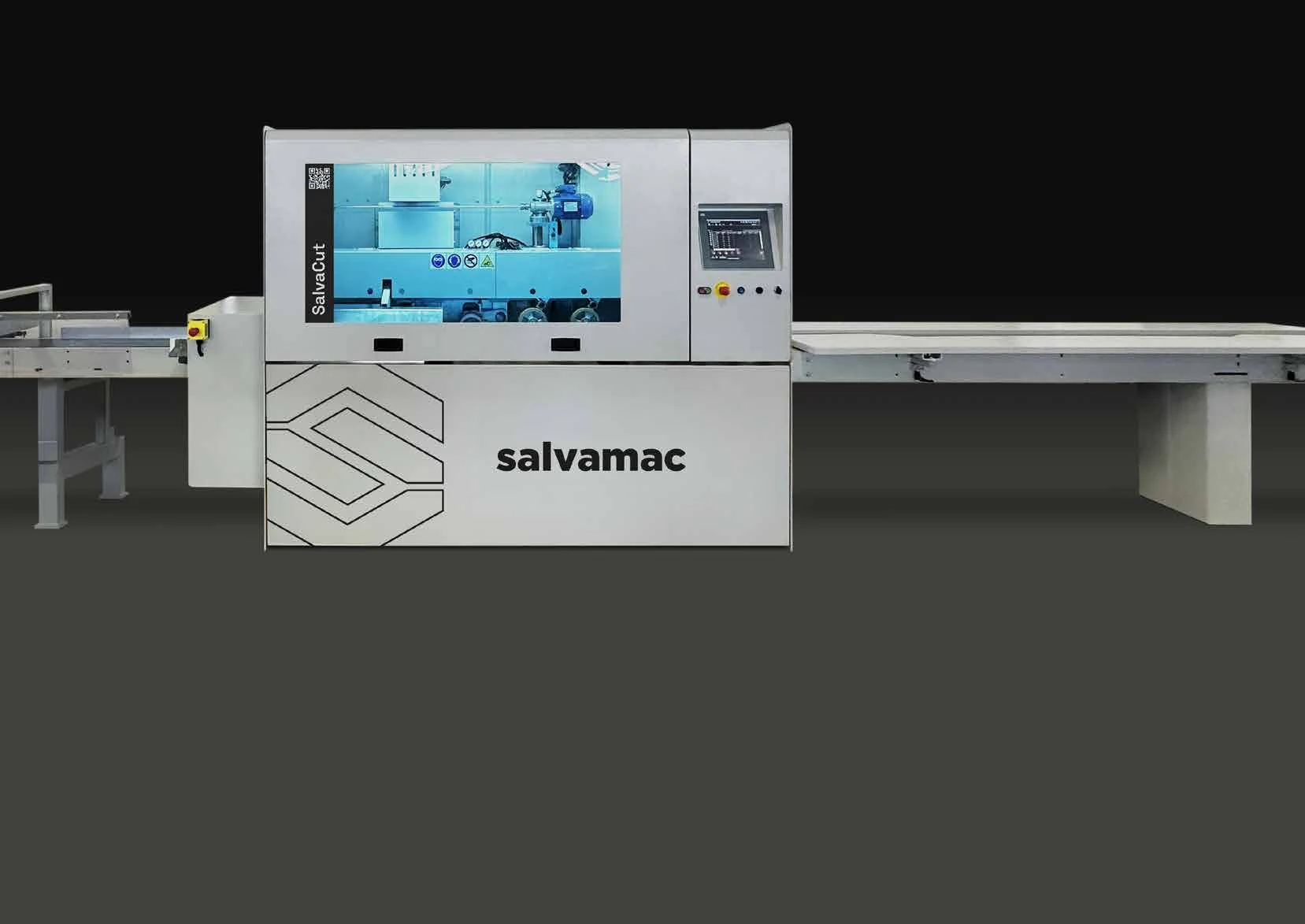

Cross-cutting systemsSmart choice.
Industrial cross-cutting built around clear operation, dependable construction and safer production. Titan brings the Salvamac Legend, SalvaPush and SalvaCut families together in one practical machine platform.
Brand platform
Simple. Solid. Safe.
Salvamac approaches cross-cutting as a complete production decision: machine structure, material handling, software, operator workflow and the level of automation required today—with room to move forward tomorrow.
Industrial construction, stable material handling and machine configurations designed around real section sizes and workloads.
Guarded cutting zones, controlled material movement and operator-focused systems that modernize conventional cross-cutting.
Choose the production path
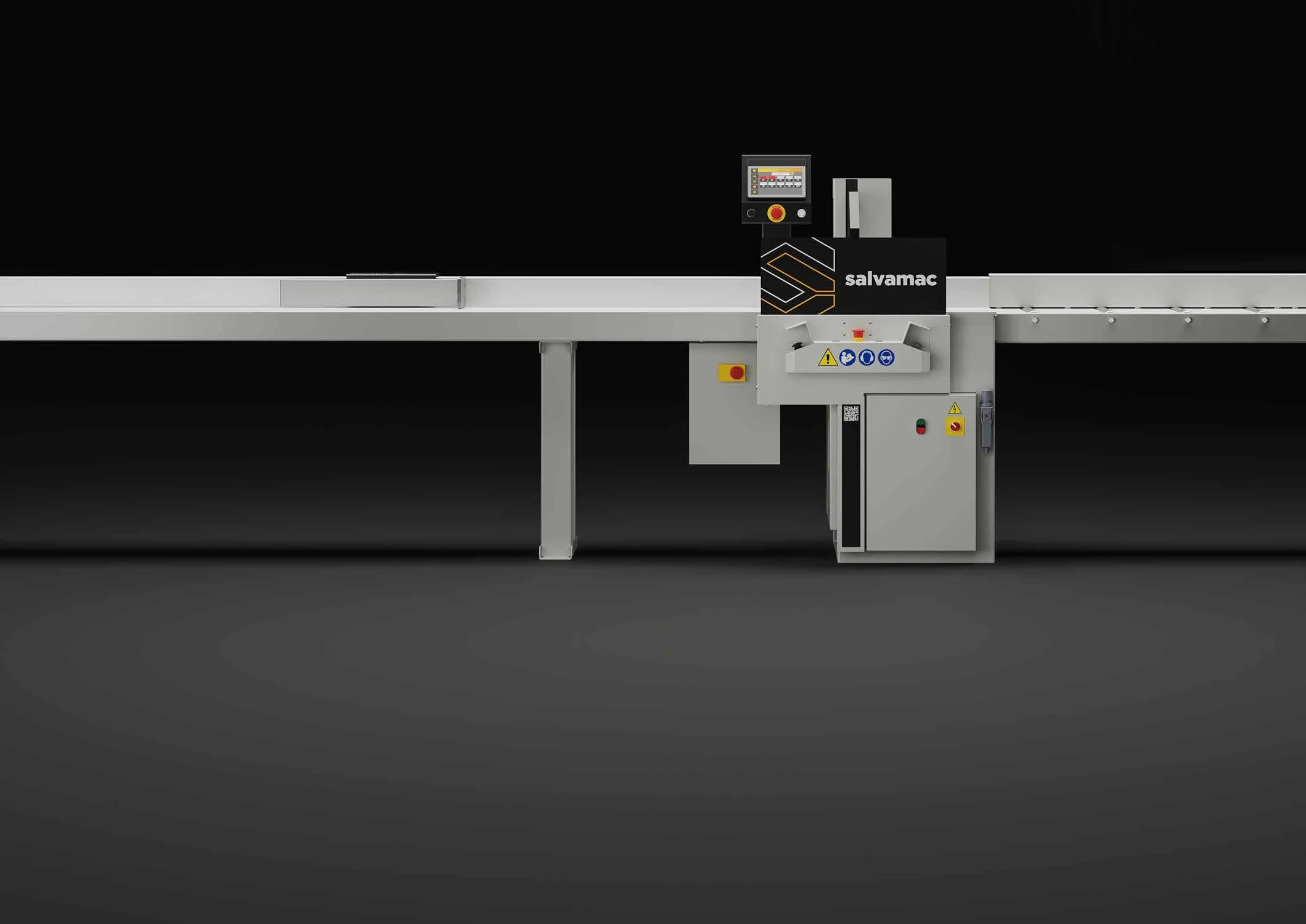 01 / SEMI-AUTOMATIC
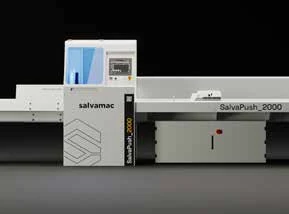 02 / PUSH-FEED
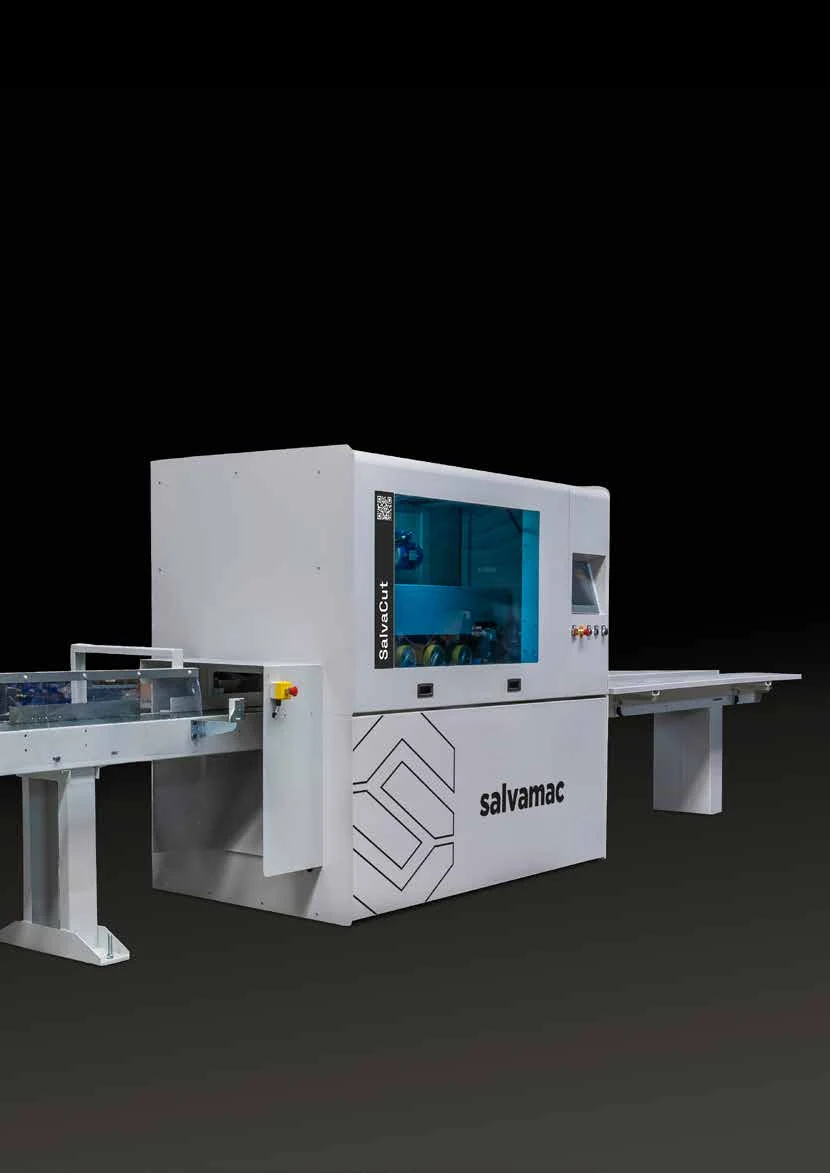 03 / THROUGH-FEED
Three machine families. One clear progression.
Start with the way material is handled and how cutting decisions are made. Legend modernizes semi-automatic cutting. SalvaPush adds programmable push-feed optimization. SalvaCut moves into high-speed, through-feed optimizing production.
01 / SEMI-AUTOMATIC
Modern cross-cutting
Legend_Series
For shops moving beyond conventional manual saw operation with guarded, scalable semi-automatic production.
02 / PUSH-FEED
Programmable optimization
SalvaPush
For repeatable cut-list production, defect handling, material optimization and software-managed positioning.
03 / THROUGH-FEED
High-speed optimization
SalvaCut
For demanding production where acceleration, traction, defect removal and optimized throughput drive the result.
06 / SALVACUT
High-speed through-feed optimization
SalvaCut
The SalvaCut family is built for advanced optimization and rapid material movement. Dual traction, independent upper rollers, lower feed-belt management and coordinated drive systems support fast acceleration, repeatable positioning and controlled stock flow.
SalvaCut 3000
SalvaCut 5000
UltraCut 7000
Production focusOptimizing cross-cutting
Material movementDual traction system
Feed speedUp to 200 m/min
Machine range500–700 mm blade class
Push-feed programmable optimization
SalvaPush
SalvaPush 2000 replaces manual positioning and judgement with software-assisted production. It is designed around programmable lengths, repeatable cut-list logic, defect management, material recovery and production reporting.
SalvaPush 2000
Defect marking
Cut-list control
Production data
Production focusPush-feed optimization
Infeed configurations2500–6100 mm
Positioning speed60–200 m/min
Blade class500 / 550 mm
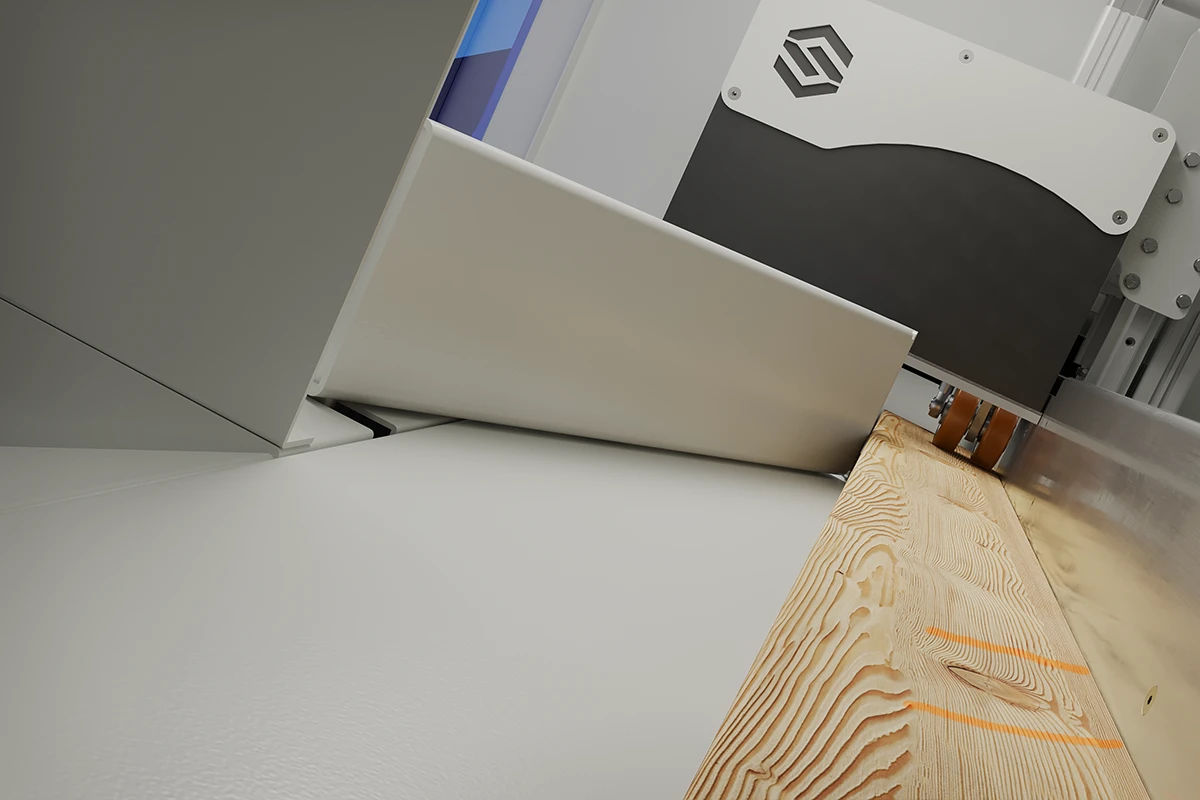 12 / SALVAPUSH 2000
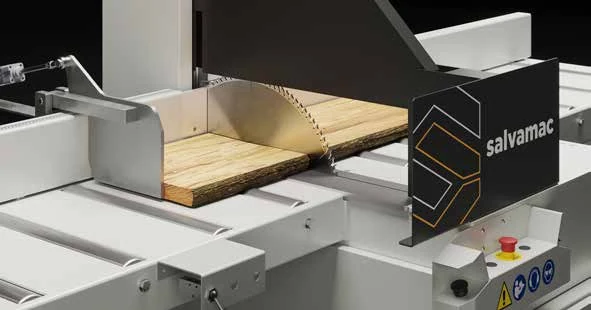 04 / LEGEND SERIES
Semi-automatic cross-cutting
Legend_Series
Legend is the practical modernization path for conventional cross-cutting. The family scales by blade size and cutting section, giving shops a guarded, stable and repeatable semi-automatic platform without immediately moving into full optimization.
Legend 400
Legend 500
Legend 550
Legend 600
Legend 650
Machine focusSemi-automatic cutting
Blade range400–650 mm
Motor range3.0–11 kW
Application rangeCompact to large sections
Machine selection logic
Start with the production problem.
The correct Salvamac system is determined by material section, incoming stock, required lengths, defect strategy, daily volume and the amount of automation the operation is ready to support.
Define the material
Maximum width, thickness, length, surface condition and the way stock arrives at the cutting station.
Define the production rate
Required pieces per shift, cut-list complexity, repeat lengths, acceleration demands and downstream flow.
Define the next growth step
Choose the machine that solves the present workload without blocking the operation's next level of automation.
Legend range
01
02
03
04
05
Scale the saw to the section.
The Legend family moves from compact daily production through to heavy large-section work. Final machine selection must be confirmed against the actual stock envelope and required cut geometry.
Legend_400
Compact production and medium-small material sections.
- Motor power
- 3.0 kW
- Maximum thickness
- 80 mm
Legend_500
The broad, versatile centre of the semi-automatic range.
- Motor power
- 5.5 kW
- Maximum thickness
- 125 mm
Legend_550
More motor authority for medium-large sections.
- Motor power
- 7.5 kW
- Maximum thickness
- 150 mm
Legend_600
Wide-section capability with tilting blade movement.
- Motor power
- 9.2 kW
- Maximum width
- 610 mm
Legend_650
The heavy-duty Legend choice for large-section work.
- Motor power
- 11 kW
- Maximum thickness
- 200 mm
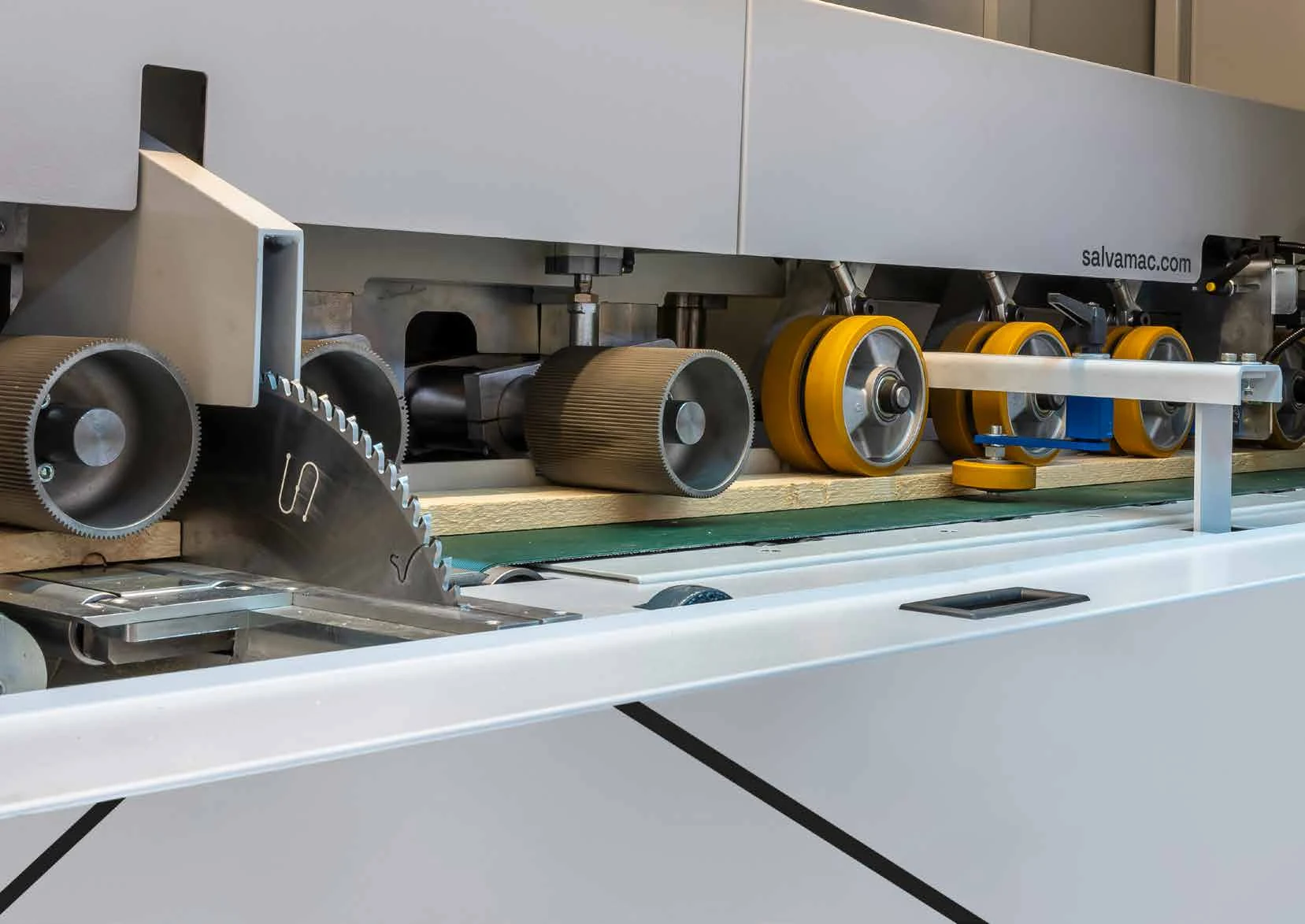
Throughput
Traction and acceleration
Position SalvaCut around controlled stock movement, rapid positioning and optimized high-speed production.
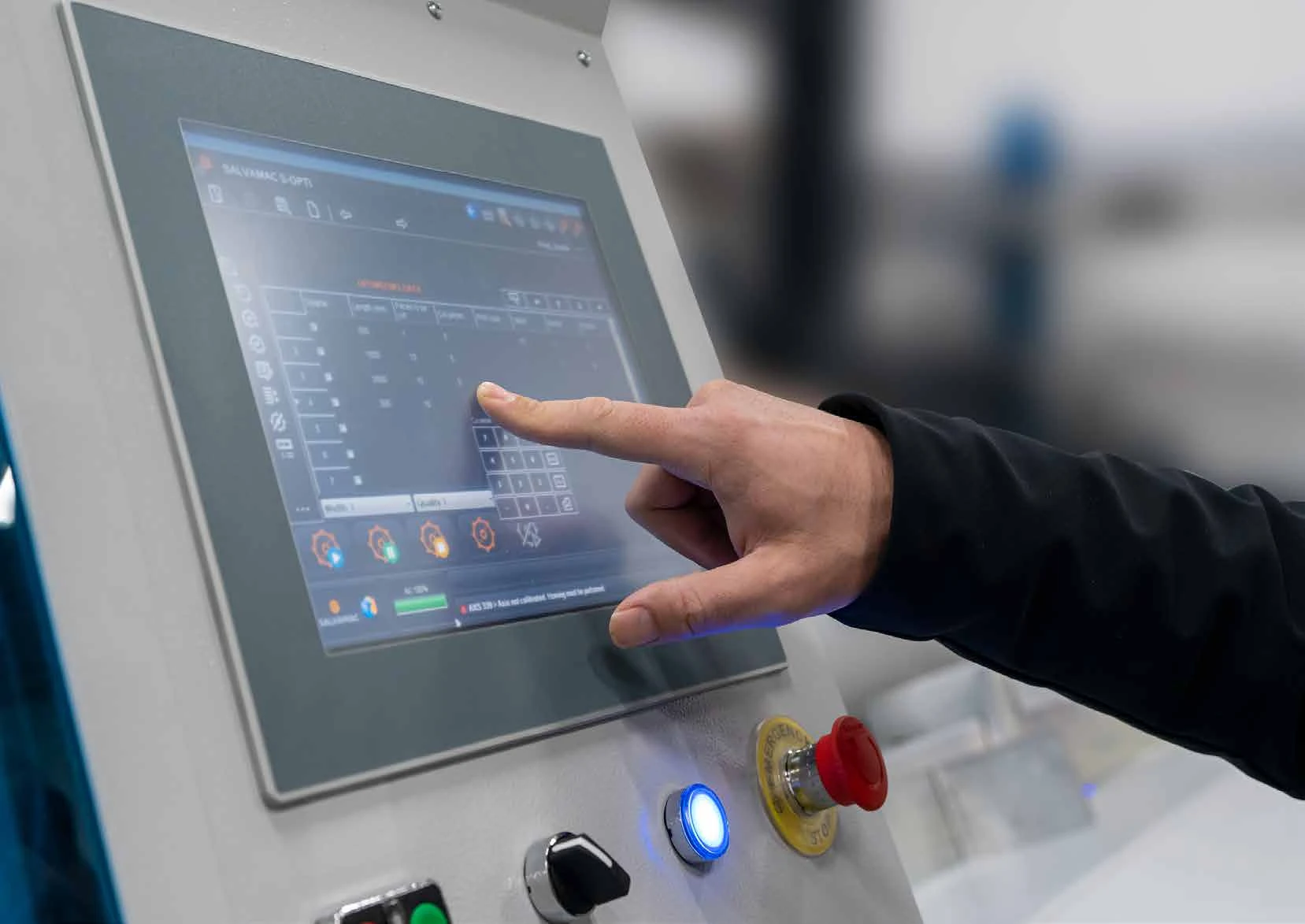
Control
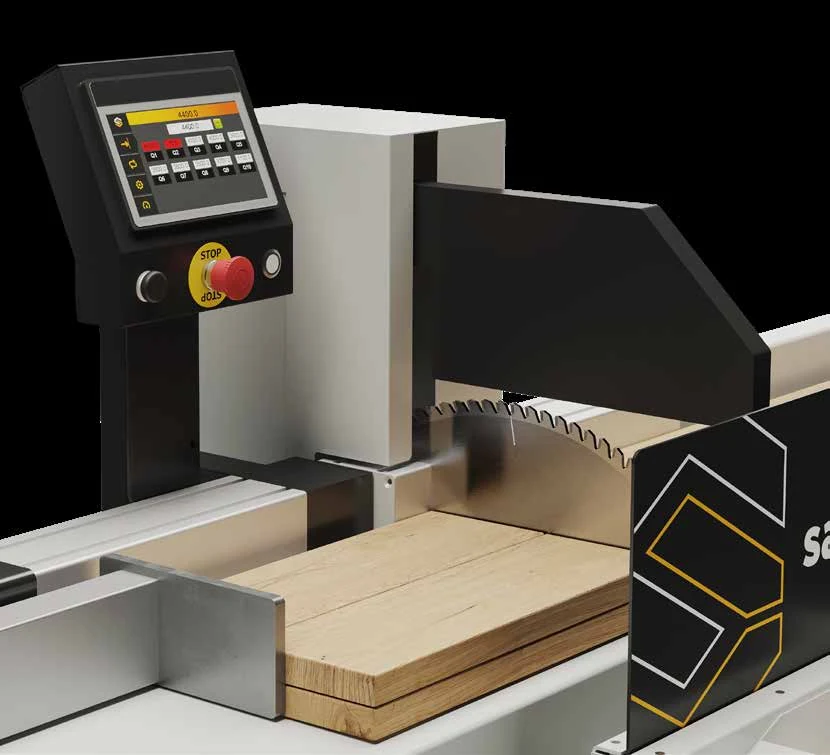
Software-led production
Move cutting decisions into a repeatable workflow with programmed lengths, production logic and operator guidance.
Modernization
Clear daily operation
Give operators a guarded, straightforward machine platform that improves consistency without unnecessary complexity.
Made in Salvamac
Smart solutions for smart people.
Salvamac develops cross-cutting, air-filtration and finishing solutions around practical industrial use. The company combines sector experience, specialized production knowledge and an international commercial network to build equipment that is meant to be understood, operated and supported.
3SSimple / Solid / Safe design philosophy
3Cross-cutting production paths
5Legend machine sizes
1Configured production solution
Build the right cutting cell.
Tell Titan what you cut, the incoming stock dimensions, the finished lengths, your defect strategy and the production rate you need. We will narrow the Salvamac line to the correct machine path.
Plan my Salvamac system
Titan machine qualification