Uniboard

Panel Applications · Uniboard · TFL · HPL · MDF · Particleboard · Edgebanding

Process Uniboard panels cleaner while protecting the finish, edge, and production flow.

Uniboard materials are a major part of Canadian cabinet, casework, closet, retail, residential, institutional, and commercial millwork production. Whether the job uses TFL, MDF-core panels, particleboard-core panels, HPL, matching edgebanding, 3DL, or finished door programs, the goal is the same: clean cuts, controlled scoring, stable hold-down, accurate direction, strong edgebanding, and parts that arrive at assembly without chips, rub marks, or edge defects.

Material Types TFL, HPL, MDF core, particleboard core, matching edgebanding, 3DL, and finished door workflows.
Watch For Chip-out, bottom breakout, edge crush, glue lines, colour mismatch, rub marks, scratches, and direction errors.
Control Sharp tooling, scoring, feed/RPM balance, vacuum, dust control, edge prep, pressure, scraping, and handling.
Result Cleaner panel flow, better edge quality, fewer remakes, stronger assembly, and better finished installations.

Uniboard is a production panel system. The board, edge, finish, and workflow all have to agree.

Uniboard jobs can involve TFL decorative panels, MDF and particleboard cores, HPL matches, edgebanding, 3DL components, finished doors, and visual finish coordination. Processing problems usually appear when the material format is not matched to the right saw scoring, CNC tooling, edgebander recipe, glue colour, direction control, dust extraction, and handling discipline.
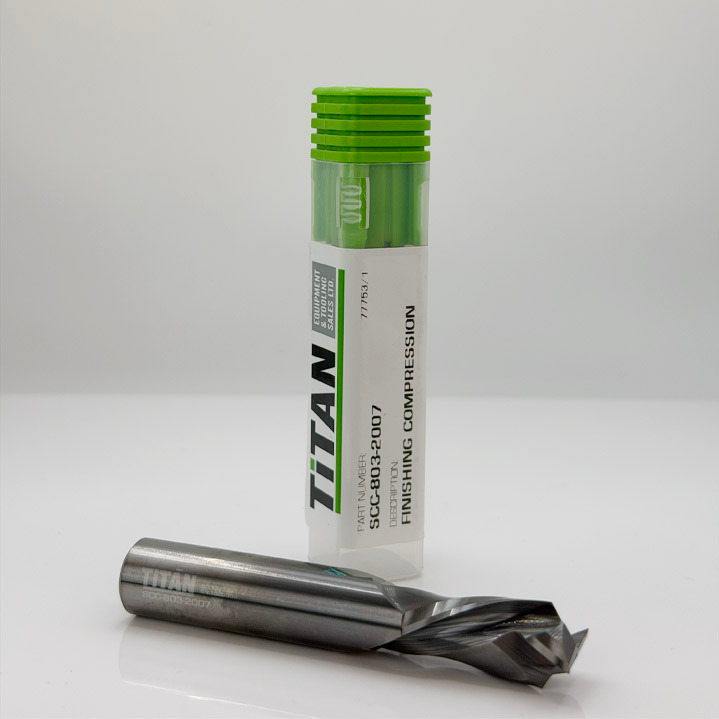
CNC router for Uniboard panel processing
CNC Cutting

Clean Edges Before the Edgebander

Use sharp compression tooling, stable hold-down, and correct feed/RPM balance to reduce face chip-out, fuzzy cores, chatter, and weak edgebanding prep.

Shop Compression Bits →
Panel saw for Uniboard decorative panels
Saw Processing

Scoring Controls Finished Faces

Beam saws and sliding table saws need correct scoring blade width, height, alignment, sharpness, support, and sheet orientation.

View Scoring Blades →
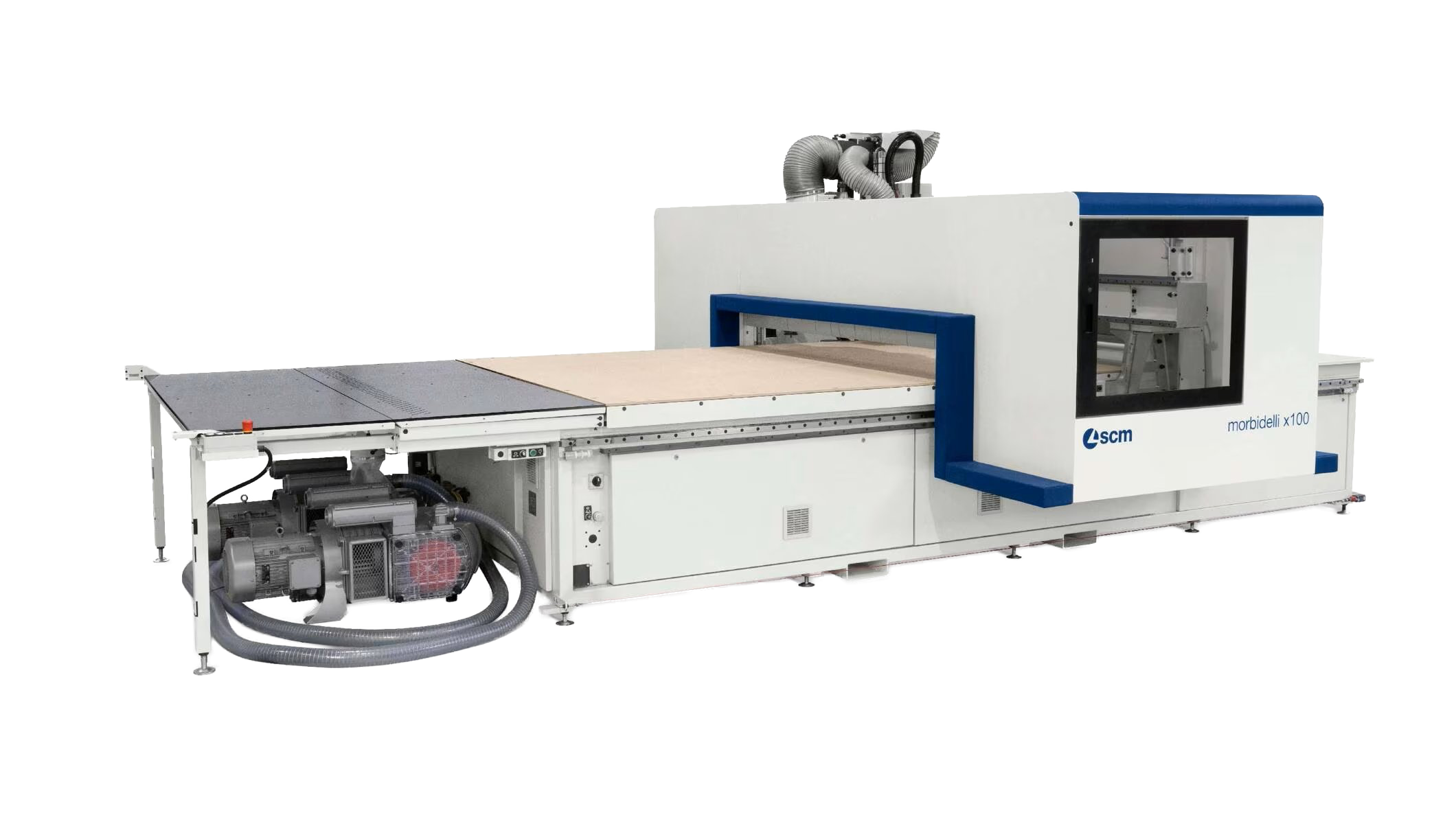
Edgebander for Uniboard edge processing
Edgebanding

Match Colour, Thickness, and Sheen

Uniboard projects often rely on coordinated panels, HPL, edgebanding, 3DL, and door programs. The edge needs to bond correctly and match visually.

View Edgebanders →
TFL · HPL · Edge Match · Score Quality · Handling Discipline

The panel can be right and the process can still make it look wrong.

Uniboard processing problems are often small but expensive: a chip on a dark TFL decor, a scoring line on a finished face, a crushed particleboard corner, a fuzzy MDF edge, an open glue line, an edge tape sheen mismatch, a rub mark from a dirty cart, or a door front rotated against the intended finish direction.

Book Uniboard Process Review

Recommended tooling path for Uniboard materials.

These tooling categories support cleaner processing across Uniboard TFL, MDF-core panels, particleboard-core panels, HPL matches, edgebanding workflows, and high-volume casework production.

Primary CNC Tool

Compression Bits

Best starting point for two-sided decorative panels where both top and bottom face quality matter.

View Category →
Saw Processing

High-Finish Blades

For beam saws and sliding table saws cutting visible TFL, HPL, finished faces, fronts, fillers, and casework parts.

View Category →
Bottom Face Control

Scoring Blades

Critical for underside breakout control on TFL, decorative panels, laminate-faced panels, and finished components.

View Category →
CNC System Health

Collets & Toolholders

Runout, worn collets, dirty holders, and long tool projection can create chatter, heat, chip-out, and poor edges.

View Category →

Uniboard product family notes for production planning.

Confirm the exact Uniboard product, colour, finish, core type, thickness, sheet format, direction requirement, matching edge, and cleaning instructions before building production settings or quoting a large job.

TFL on Particleboard Core Common for casework, closets, commercial fixtures, and cabinet components. Watch for chip-out, particleboard edge crush, pressure sensitivity, and poor pre-mill quality.
TFL on MDF Core Useful where smoother machining and face quality are priorities. Watch for fuzzy MDF edges, dust contamination, heat, and absorbent edges before banding.
HPL Matching Workflows HPL needs clean substrate prep, dust-free bonding, flat pressure, clean trimming, and correct scoring to avoid chips, telegraphing, and bond defects.
Edgebanding Match Matching edges should be coordinated by colour, finish, thickness, glue system, trimming setup, scraper setup, and buffing pressure.
3DL and Door Coordination If the job mixes flat panels with 3DL or finished doors, confirm colour, texture, gloss, orientation, and batch expectations before production.
Finish and Texture Direction Woodgrain, linear textures, Supermat-style finishes, Brushed Elm-style textures, and visible fronts need planned orientation across doors and panels.
Cleaning and Surface Care Use approved cleaning practices and clean microfiber-style handling. Abrasive pads, dirty cloths, and dry wiping can create haze, shine patches, or scratches.
Batch and Sample Control Confirm physical samples, edge match, lighting, and job batch expectations. Screens do not reliably show final colour, texture, or sheen.

Technical setup guide.

Exact CNC and saw settings depend on machine condition, spindle power, blade geometry, bit diameter, sheet format, core type, surface finish, vacuum, dust extraction, part size, edgebanding strategy, and production speed.

CNC Cutting Method Use compression routing for two-sided TFL panels. Verify both top and bottom faces before pushing parts to edgebanding or assembly.
Panel Saw Strategy Use a sharp main blade and correctly aligned scoring blade. Track scoring height, width, blade wear, support, and sheet orientation.
Feed and RPM Balance Cut chips instead of rubbing. Rubbing creates heat, dulls tools, damages decorative surfaces, and worsens chip-out.
Hold-Down Vacuum, spoilboard condition, gasketing, part size, onion skin strategy, and toolpath order all affect edge quality and small-part stability.
Edgebanding Prep Edges must be straight, clean, square, dust-free, and consistent. Pre-mill should remove machining damage without creating steps or exposing weak core.
Scraping and Buffing Edges can be ruined by aggressive scraping, over-buffing, wrong radius, or glue-line contamination. Match the recipe to edge thickness and finish.
Direction Control Use labels, nesting rules, and operator checks to keep grain, finish, texture, and door/front orientation consistent.
Material Handling Use clean carts, separators, gloves where appropriate, controlled stacking, and inspection lighting. Finished faces should not slide face-to-face.

Typical Uniboard CNC, saw, edgebanding, and handling problems.

Uniboard issues usually come from the interaction between TFL surface, MDF or particleboard core, texture direction, machine setup, tooling, scoring, hold-down, dust extraction, edgebanding, cleaning, and handling.

CNC Edge Defect

Top-Face Chip-Out

Often caused by dull tooling, wrong compression geometry, poor hold-down, aggressive passes, wrong feed/RPM, or tool runout.

Saw Setup Problem

Bottom Blowout

Usually tied to scoring blade misalignment, scoring width mismatch, worn scoring teeth, poor sheet support, or wrong blade selection.

Surface Issue

Rub Marks and Scuffs

Can happen when parts drag across dust, carts are dirty, operators over-clean, buffing is too aggressive, or chips are trapped between parts.

Surface Damage

Scratches

Often caused by dirty saw tables, rough carts, stacked finished faces, poor outfeed handling, or cleaning with abrasive cloths or pads.

Direction Problem

Grain or Finish Mismatch

Doors, fillers, gables, shelves, and panels can look wrong if texture, grain, or sheen direction is not controlled in nesting and assembly.

Edgebanding Issue

Visible Glue Line

Usually caused by wrong glue colour, too much glue, weak pressure, dirty edges, poor pre-mill, wrong tape thickness, or scraper problems.

Edge Match Issue

Colour or Sheen Mismatch

Occurs when the selected edge tape, decor, finish, thickness, or lighting condition does not match the board face.

Core Problem

Particleboard Edge Crush

Can come from excessive pressure, dull pre-mill, aggressive trimming, poor support, weak material at the cut edge, or rough handling.

MDF Problem

Fuzzy or Absorbent Edge

MDF-core parts can fuzz if the cutter is dull, feed is wrong, dust extraction is poor, or tooling is not suited to the application.

CNC Stability

Chatter and Wavy Edges

Usually tied to tool runout, worn collets, long tool projection, weak vacuum, spoilboard leaks, poor hold-down, or aggressive cut settings.

Laminate Problem

Telegraphing and Bond Defects

Can happen with poor substrate prep, debris under laminate, uneven pressure, adhesive inconsistency, or contamination before pressing.

Handling Damage

Corner Bruising and Face Marks

Often happens after a good cut because finished components are handled like raw commodity board instead of finished visible parts.

Common troubleshooting solutions.

Use this as a diagnostic path. Change one variable at a time and test on offcuts before committing finished Uniboard panels to production.

For Top-Face Chip-Out Inspect tool sharpness, use correct compression geometry, reduce runout, confirm climb/conventional strategy, improve vacuum, and test feed/RPM balance.
For Bottom Blowout Adjust scoring height and width, inspect scoring teeth, confirm main blade sharpness, support the sheet, and check face-up or face-down cutting strategy.
For Bad Edgebanding Check edge cleanliness, pre-mill depth, glue temperature, glue quantity, pressure rollers, edge tape match, trimming, scraping, and buffing pressure.
For Finish Direction Problems Control grain, texture, and finish direction in CAD/CAM, labels, cutlists, carts, and assembly. Do not allow random rotation on visible components.
For Rub Marks Reduce friction, stop dragging parts, clean carts and tables, inspect buffing pressure, avoid abrasive cleaning, and review handling after cutting.
For Fuzzy MDF Edges Use sharper tooling, improve chip evacuation, reduce rubbing heat, review chip load, and avoid feeding poor edges directly into the edgebander.
For Particleboard Core Breakout Use cleaner scoring, reduce aggressive trimming, improve pressure support, pre-mill lightly, and verify board quality before blaming the edgebander.
For Handling Defects Use clean carts, separators, padded contact points, gloves where appropriate, racking rules, inspection lighting, and no face-to-face sliding.

Build the full Uniboard processing system.

Clean Uniboard production is not only a tooling conversation. The best results come from matching CNC tooling, panel saw scoring, edgebanding, dust collection, finish direction, labelling, cleaning, handling, and inspection into one controlled workflow.

Sliding table saw for Uniboard decorative panels
Machine Support

Sliding Table Saws

Precision cutting support for Uniboard panels, fillers, finished faces, doors, shelves, and visible decorative components.

View Sliding Saws →
Panel saw for Uniboard production cutting
Panel Flow

Panel Saws & Beam Saws

High-throughput cutting solutions for repeat rectangular Uniboard parts, cabinet components, wall panels, furniture parts, and casework cells.

View Panel Saws →
Panel return system for Uniboard parts
Material Flow

Handling & Returns

Reduce scratches, face contamination, lifting, walking time, direction mix-ups, part confusion, and finished-face damage.

View Handling Systems →

Video demo library.

Use this section for Titan YouTube demos as they are produced. Each demo should connect directly to a real Uniboard production issue and a recommended tooling, machine, or handling category.

Uniboard Compression Bit Test

Compare edge quality across TFL, MDF-core, particleboard-core, and darker decorative colours using different cutting strategies.

Scoring Blade Setup for Uniboard Panels

Show how scoring blade height, width, and alignment affect bottom-face chip-out on TFL and decorative panels.

Matching Uniboard Edging to Finished Panels

Demonstrate edge tape selection, glue-line control, pre-mill setup, scraping, buffing, and final visual inspection.

Uniboard Troubleshooting Request

Send us the Uniboard issue. We’ll help diagnose the production problem.

Use this form when Uniboard material is chipping, scratching, breaking out, banding poorly, showing direction mismatch, glue-line problems, rub marks, laminate bond issues, or handling damage. The goal is to identify whether the issue is tooling, scoring, CNC hold-down, saw setup, dust extraction, edgebanding, cleaning, direction control, or material handling.

  • Top or bottom chip-out during CNC routing or saw cutting.
  • Bottom breakout from scoring errors or unsupported final passes.
  • Visible glue line, open glue line, poor edge match, or edge lifting.
  • Surface scratching, cleaning haze, rub marks, or finished-face scuffs.
  • Direction mismatch between doors, fillers, panels, fronts, or wall runs.
  • Edge mismatch between TFL board, HPL, and matching edgebanding.
  • Rough MDF edge, fuzzy core, particleboard crumble, or edge crush.
  • Chatter, vibration, bad edge quality, or short tool life.
  • Laminate telegraphing, bond defects, bubbles, or surface contamination.
  • Handling dents, crushed corners, face scuffs, or edge bruising after cutting.
Uniboard Processing Details
Upload close-up photos of the cut edge, top face, bottom face, scratches, scoring line, tool, blade, spoilboard, edgebanding, glue line, edge tape label, colour/finish code, direction arrows, cart damage, or machine setup. PDF setup sheets are also useful. Backend form handling must support attachments for files to be delivered.
Titan will use the Uniboard product family, colour, finish, core type, machine setup, tooling details, edge strategy, handling method, and uploaded images to help identify likely causes and recommend a cleaner processing path.

Send us the Uniboard panel and the production issue. We’ll help build the process.

Tell us your Uniboard product family, colour, finish, substrate, machine model, current tooling, cutting method, edge-banding plan, direction requirement, and the defect you are seeing. Titan can help recommend a cleaner tooling and process path before the next sheet hits the table.

Copyright © 2026 - Titan Equipment and Tooling Sales