
XtraSharp
XtraSharp saws built for fast ripping, straight edges, stable feed, and high-volume stock breakdown.
XtraSharp gives woodworking shops a focused lineup for material breakdown: multi-rip saws, straight-line rip saws, compact edging, and high-throughput ripping systems. Titan positions XtraSharp around real production pressure — feeding moulders, preparing glue-ready edges, reducing manual ripping, stabilizing rough stock flow, and improving yield before material reaches the next work cell.
XtraSharp is about controlling the rip station before the rest of the shop inherits the problem.
Ripping looks simple until the shop is busy. Crooked edges, inconsistent strips, rough feed, unstable stock, dull blades, poor dust extraction, and unsafe manual handling can create problems all the way downstream. XtraSharp gives Titan customers a practical route from compact straight-line edging to high-volume multi-rip breakdown with better stability, throughput, and safety built into the process.
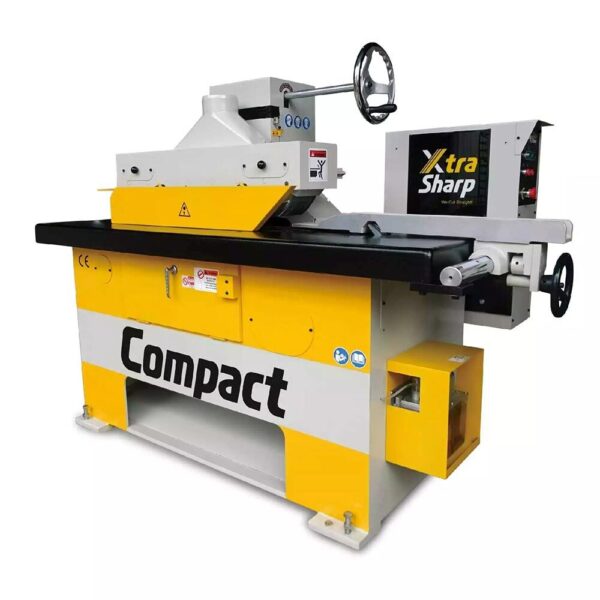
Clean up the edge before glue, jointing, or further machining.
The Compact SA-12 gives smaller shops a serious step into controlled straight-line ripping with chain feed, pressure rollers, anti-kickback protection, and a compact footprint.
View Compact SA-12 →
Turn boards into consistent strips without dragging setup time.
FasTrack adds precision blade positioning logic with Lock & Spin and Move & Spin systems, giving production shops a stronger path for fast, repeatable multi-rip work.
View FasTrack →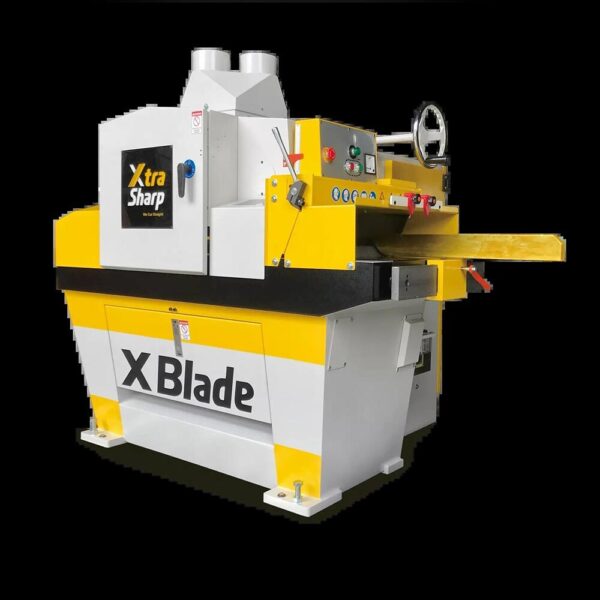
High-throughput stock breakdown for serious production.
The X-Blade is the heavy-duty choice when the shop needs multi-blade ripping, stronger horsepower, high cutting stability, and consistent output shift after shift.
View X-Blade →The rip station is where good lumber becomes controlled production — or expensive waste.
When ripping is done with poor support, weak feed control, inconsistent blade setup, dull tooling, or undersized dust extraction, the shop pays for it later. Glue lines suffer. Moulders get inconsistent stock. Assembly fights variation. Operators slow down to compensate. A planned XtraSharp rip cell gives the shop a more repeatable way to break down material and feed the next machine with confidence.
Plan My Rip Saw CellXtraSharp machine lineup from Titan Equipment.
Titan’s XtraSharp lineup is focused and practical: compact straight-line edging, advanced dual-chain ripping, fast multi-rip setup, high-throughput multi-rip production, and Xtra Wood ripping support. Each machine should be selected around stock size, production volume, feed stability, blade setup, dust collection, and what happens downstream.
Xtra-Sharp Compact SA-12
A compact single-chain straight-line rip saw for producing straight, smooth, accurate edges before gluing, jointing, moulding, or further machining.
Best fit: small to growing solid wood shops, glue-line prep, custom woodworking, and first serious straight-line ripping upgrades.
View Compact SA-12 →
Xtra-Sharp Advanced SA-13/20/22
A dual-chain straight-line rip saw for heavier, more stable ripping and splitting. The dual-chain conveyor, V-shaped rails, eight pressure rollers, and bottom saw arbor support accurate continuous cutting.
Best fit: production solid wood shops, moulding prep, heavier edging, ripping/splitting, and upgraded rip-line stability.
View Advanced SA →
Xtra-Sharp FasTrack Multi Rip Saw
A high-performance multi-rip saw with Lock & Spin / Move & Spin blade positioning systems, laser alignment, cast-iron chain conveyor, pressure rollers, and automatic lubrication.
Best fit: shops that need faster blade setup, repeat strips, production ripping, and cleaner multi-rip throughput.
View FasTrack →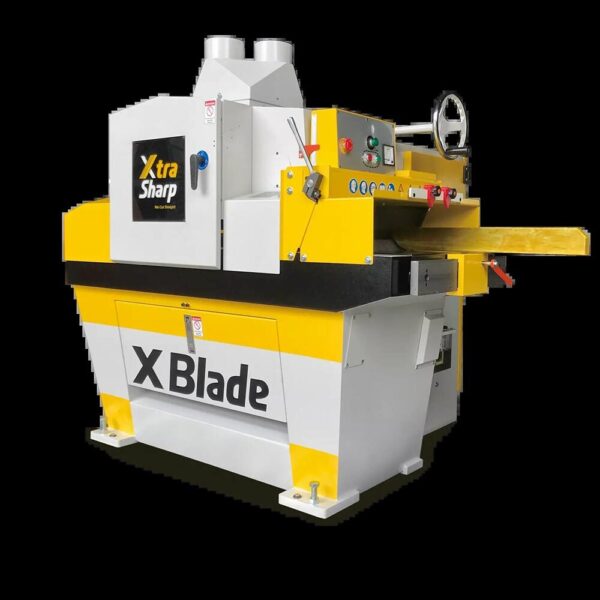
Xtra-Sharp ShortCut Multi Rip Saw
A heavy-duty multi-rip saw for ripping wood into multiple straight, smooth strips in one pass, with welded-steel frame construction, precision arbor, cast-iron chain conveyor, and pressure plates.
Best fit: production shops needing multi-blade ripping with a practical 40 HP class spindle platform.
View ShortCut →
Xtra-Sharp X-Blade Multi Rip Saw
The heavy-duty multi-rip option for high-throughput ripping, multiple blades, straight smooth edges, heavy motor capacity, stable feed, and production-focused material breakdown.
Best fit: high-volume ripping, larger stock, production strips, and shops where material breakdown is a daily capacity constraint.
View X-Blade →
Xtra Wood FasTrack Multi Rip Saw
A production ripping system positioned for fast, precise material breakdown with precision rails, automatic feed control, and customizable saw spacing.
Best fit: shops optimizing productivity and reducing material waste in production ripping environments.
View Xtra Wood FasTrack →XtraSharp comparison by production role.
The right rip saw depends on what the station needs to own: straightening one edge, splitting stock, ripping repeat strips, increasing throughput, or preparing material for moulders, glue-ups, furniture parts, door components, or downstream machining.
Shop size recommendations.
XtraSharp is a focused sawing lineup, so selection should be practical: start with the size of stock, the number of ripping passes per shift, the quality required at the next machine, and whether the shop needs straight-line edging, multi-rip throughput, or both.
Start by controlling the edge.
Smaller shops usually need a safer and more repeatable alternative to manual edging and inconsistent glue-line preparation. The goal is clean stock, straighter parts, and less hand correction.
Recommended path: Compact SA-12, proper dust extraction, blade program, operator training, and a future upgrade path toward dual-chain ripping if volume grows.
Move from edging to controlled throughput.
As daily volume increases, ripping becomes a feed-stability and setup problem. The shop needs stronger conveyors, pressure control, better repeatability, and less time lost between widths.
Recommended path: Advanced SA for stable straight-line ripping or FasTrack for faster multi-rip setups, with dust collection and stock staging reviewed at the same time.
Build the rip station as a production cell.
At higher volume, ripping should not be a manual bottleneck. The machine, blade layout, infeed, outfeed, dust extraction, offcut handling, and sharpening plan all need to work as one system.
Recommended path: ShortCut or X-Blade multi-rip, blade lifecycle planning, material staging, dust extraction, operator routines, and downstream moulder/feed alignment.
Current state to future state upgrade planning.
A rip saw upgrade should reduce labour, improve edge quality, control waste, and support downstream flow. Titan should position XtraSharp as a practical upgrade path from manual ripping to a measurable production ripping cell.
Where XtraSharp fits in real woodworking production.
XtraSharp machines sit near the front of the solid wood production flow. When the rip station improves, downstream cells get cleaner, more consistent material — and that affects everything from glue-ups to moulders to furniture and cabinet parts.
Buying questions Titan should ask before quoting XtraSharp.
The right machine depends on stock size, material volume, cut quality, blade count, feed strategy, dust collection, operator skill, and what the material needs to do next.
What thickness, width, and length are being ripped daily?
Maximum material size matters, but frequency matters more. Daily heavy stock should drive the machine choice differently than occasional oversized jobs.
Is this edge cleanup, ripping, or high-volume breakdown?
Compact straight-line edging, advanced ripping, and multi-rip production solve different problems. Titan should identify the role before choosing the model.
How often do widths change?
Frequent width changes point toward faster setup and blade-positioning logic. Repeat production can justify stronger multi-rip planning and dedicated blade programs.
Can the extraction system handle the chip load?
Rip saws can generate serious waste. Dust port size, collector horsepower, ducting, cleanup pressure, and operator visibility should be reviewed with the machine.
Where does the ripped material go next?
Glue-up, moulding, planing, shapers, CNC, sanding, and assembly all need different levels of edge quality and dimensional repeatability.
What workarounds are happening now?
Unsupported boards, poor feed habits, kickback risk, manual pressure, and inconsistent setup are signs that the rip station needs a proper production solution.
Build the full XtraSharp ripping cell.
A rip saw does not perform by itself. The best result comes from blade selection, dust extraction, infeed/outfeed support, operator routines, sharpening plans, and material staging designed around the saw.

Control the chip load before it controls the shop.
Rip saw dust and chips affect visibility, cleanup, blade heat, safety, machine maintenance, and downstream finish quality.
View Dust Collection →
Feed the saw without burning labour.
Infeed, outfeed, carts, conveyors, sorting, offcut handling, and staging determine whether the saw creates throughput or piles.
View Material Handling →
Balance breakdown, ripping, and crosscut flow.
Band saws, chop saws, optimization saws, and rip saws should be planned together so stock breakdown does not simply move the bottleneck.
View Sawing Equipment →Plan the rip saw around the material flow — not just the horsepower.
Tell Titan what you rip, how often widths change, what material sizes cause problems, where the parts go next, and how the current rip station slows the shop down. We can help match the right XtraSharp machine to your production role: compact straight-line edging, advanced ripping, fast multi-rip setup, or heavy-duty material breakdown.