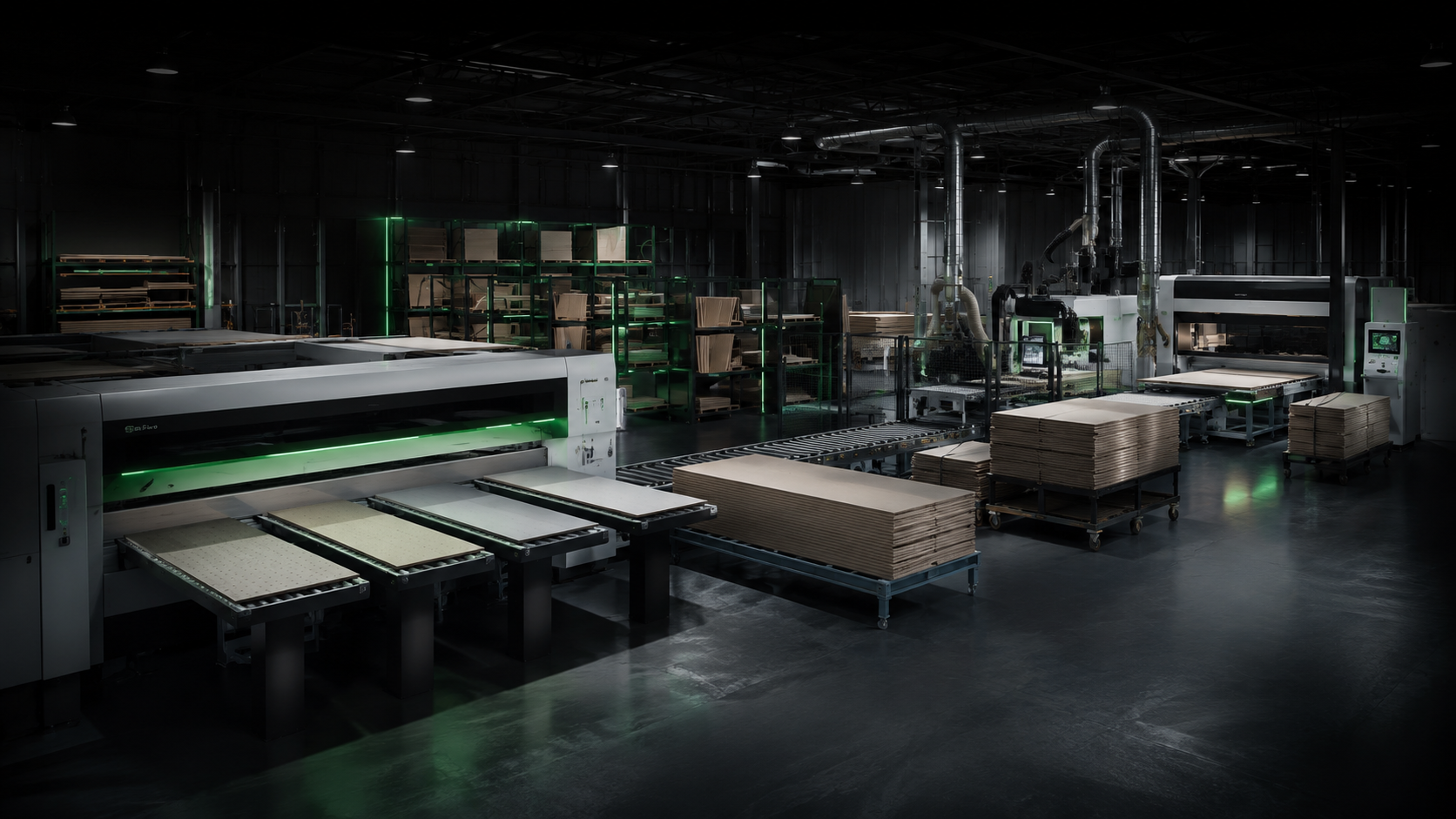
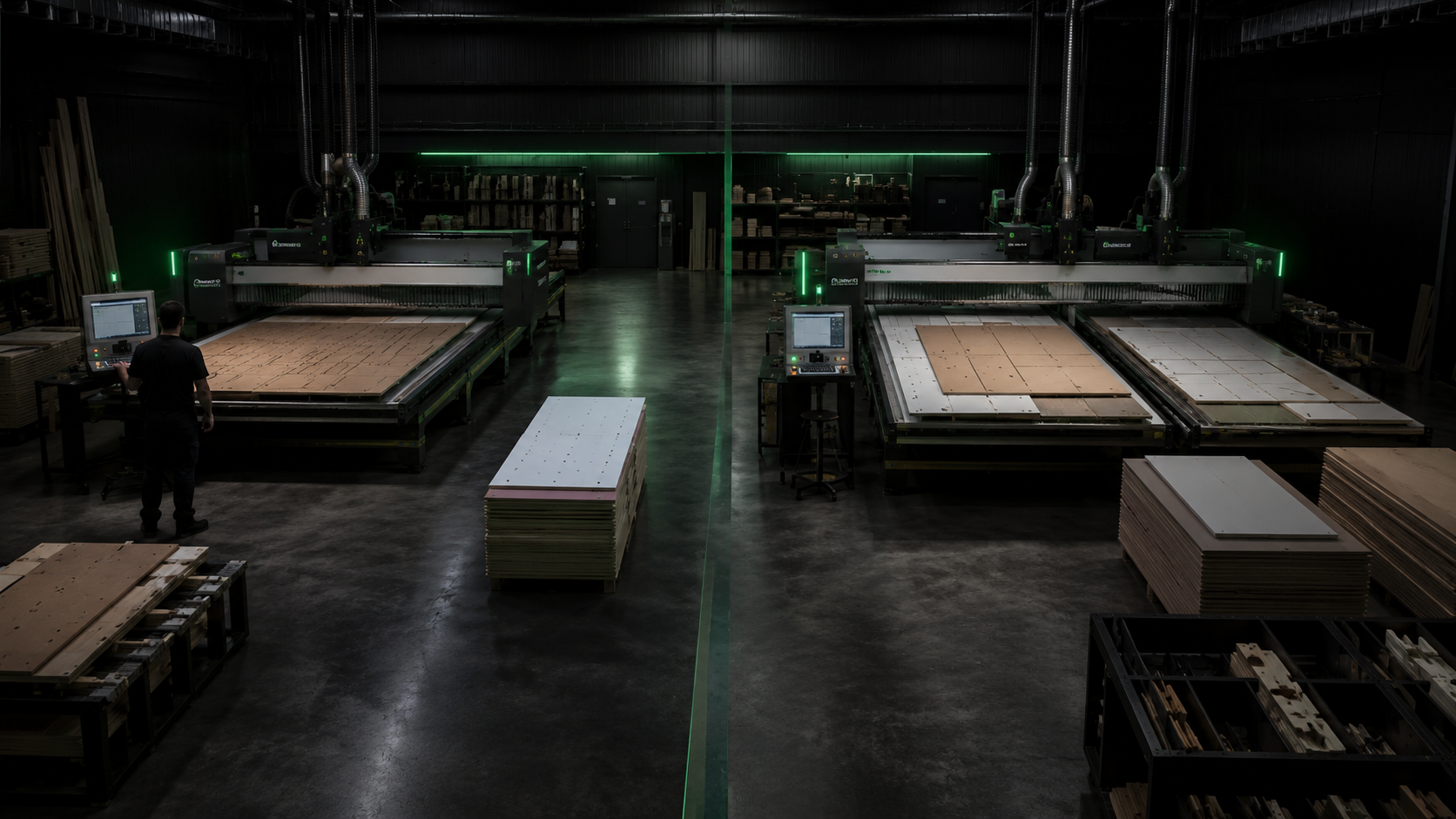
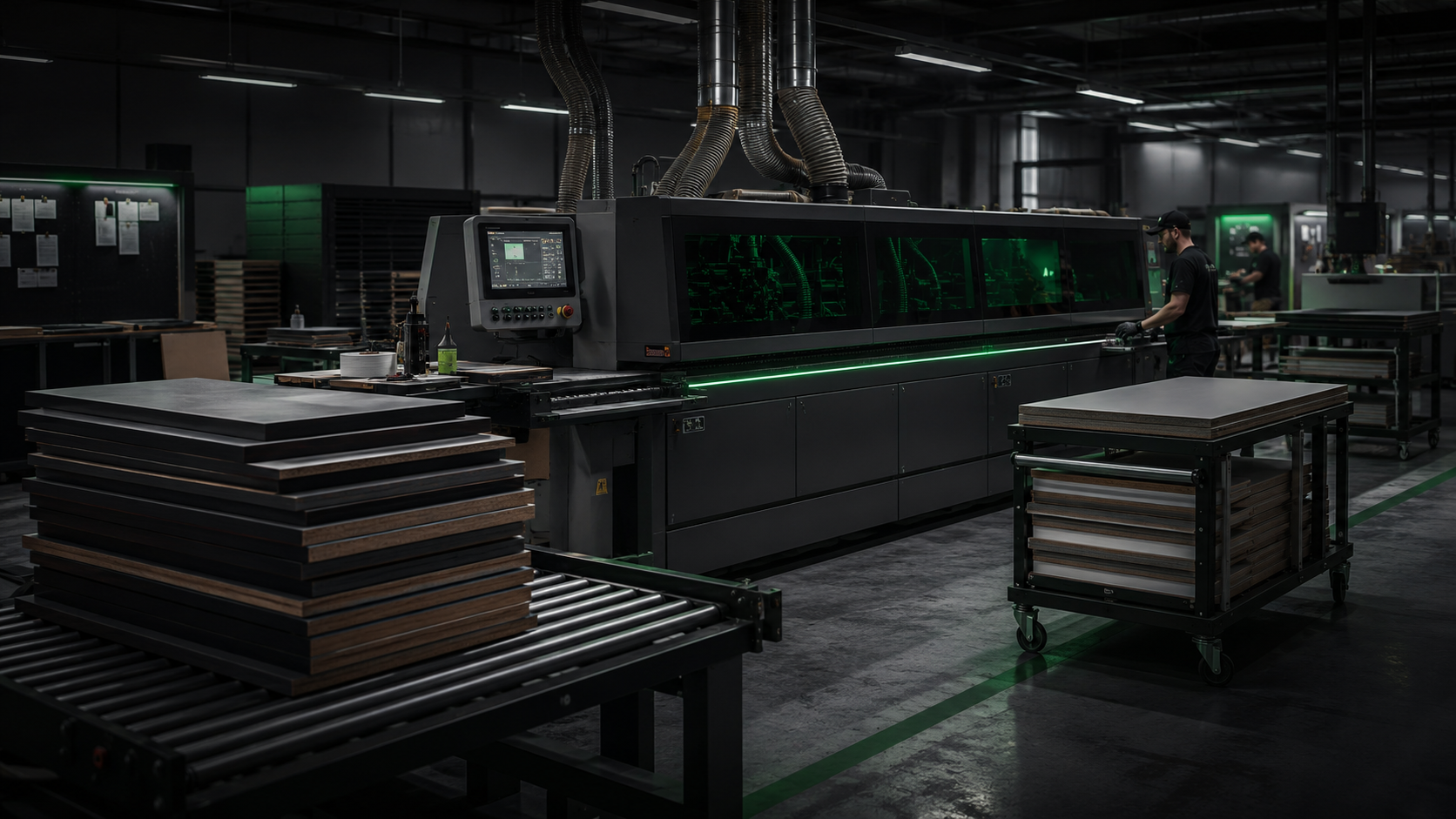
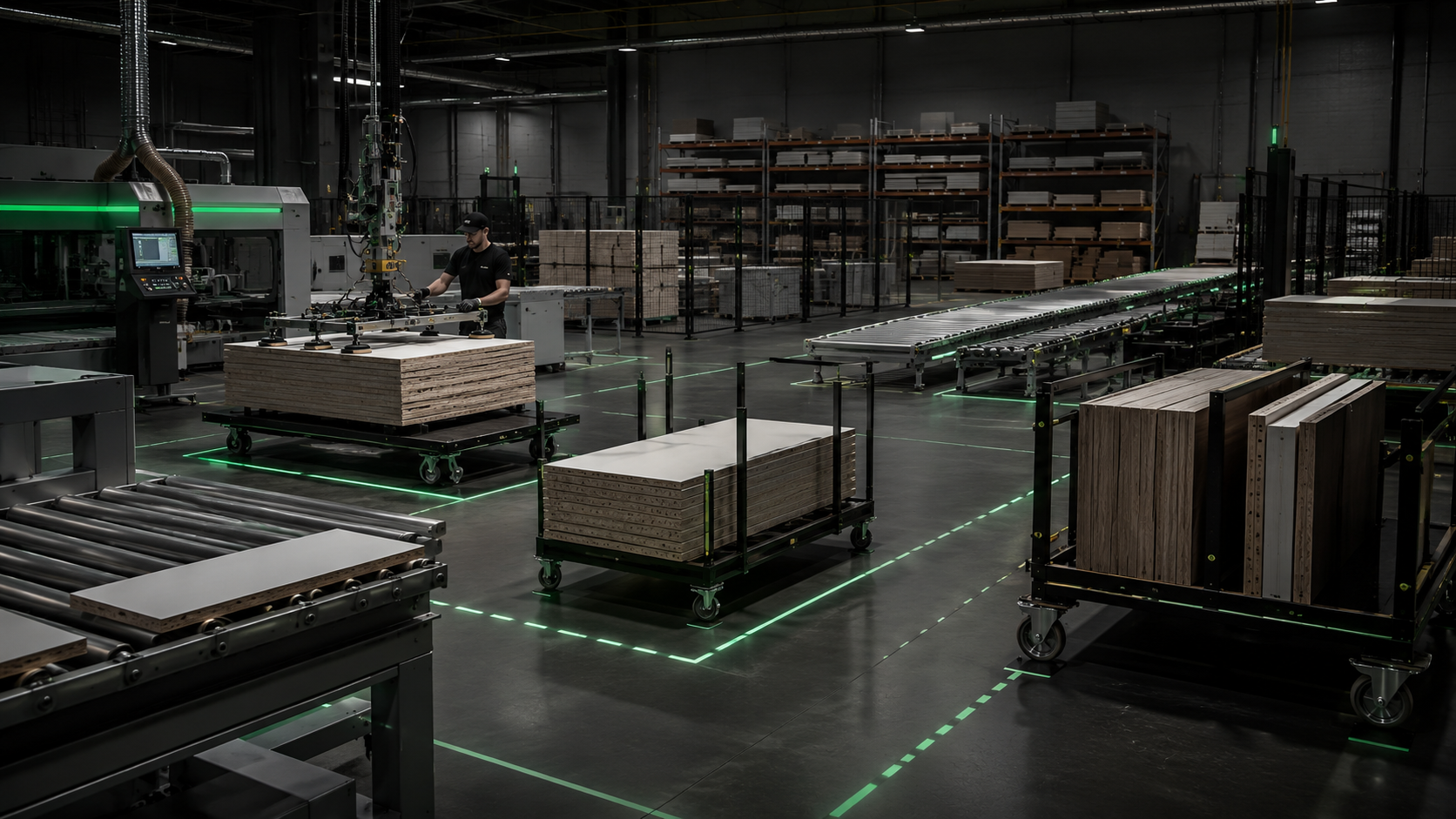
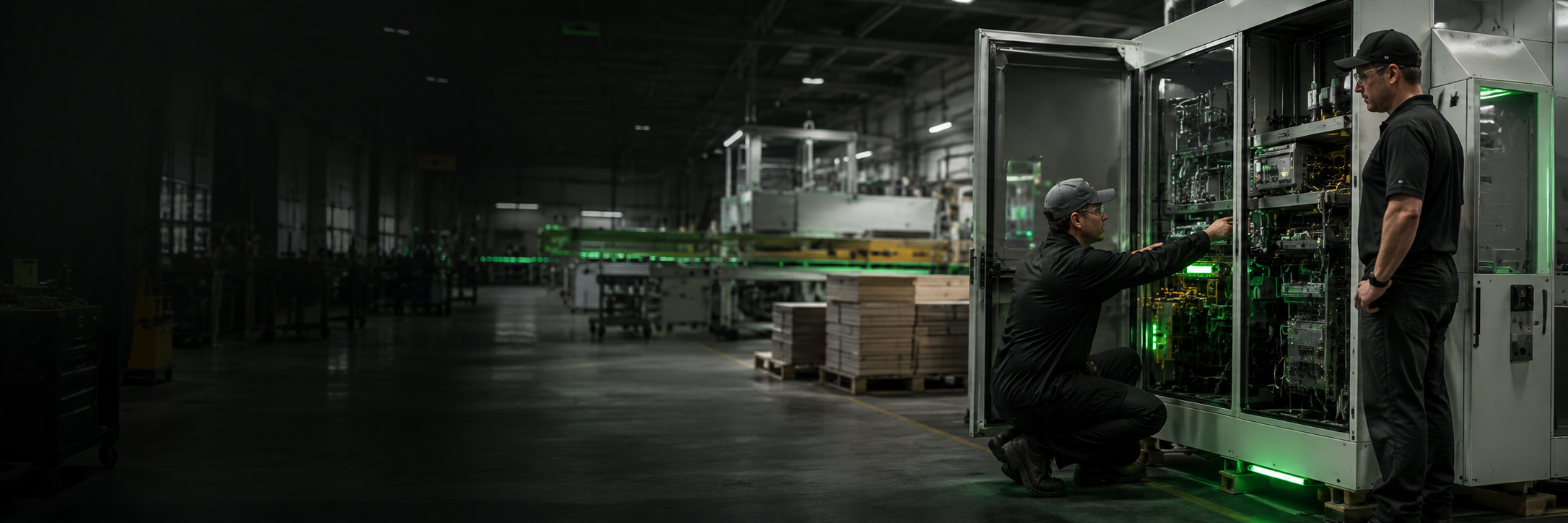
End-to-end machinery, tooling, automation, material handling, and service solutions for cabinet shops that need to increase capacity, control quality, reduce labour bottlenecks, and scale production without losing the flexibility required for custom work.
Increase CapacityRun more parts per shift with better machine planning, smarter flow, and fewer manual bottlenecks.
Improve AccuracyReduce remake rates with precision cutting, drilling, edge processing, and assembly systems.
Reduce WasteOptimize panel yield, part handling, tooling selection, dust control, and production sequencing.
Maximize ProfitLower cost per part by balancing machine utilization, labour, material flow, and finishing capacity.
The Complete Cabinet Shop Ecosystem
Built Around Real Production Flow
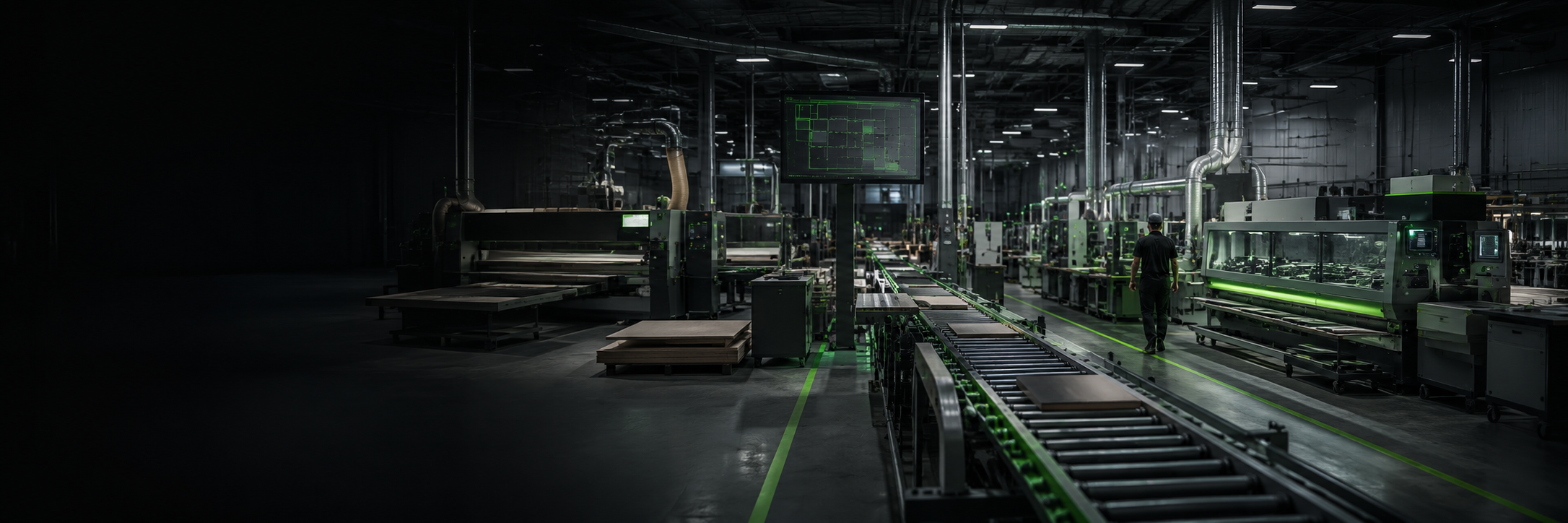
A profitable cabinet shop is not built around one machine. It is built around flow. Raw panels need to move cleanly from receiving to cutting, machining, edgebanding, drilling, sanding, finishing, assembly, packaging, and shipping. When one workstation is overloaded, under-equipped, or physically located in the wrong place, the entire shop loses throughput.
Titan helps cabinet and casegoods manufacturers look at the full system: machinery, tooling, operators, service access, dust collection, material staging, conveyors, cranes, software, and future expansion. The goal is simple: fewer bottlenecks, fewer remakes, better labour utilization, and more profitable output per square foot.
From Custom Shops to High-Volume Production Cells
Cabinet manufacturers often start with flexible equipment: a sliding table saw, an edgebander, a small CNC, and manual assembly benches. As volume increases, the shop needs to decide when to add a beam saw, when to split CNC nesting from point-to-point drilling, when to add conveyors, when to automate dowel insertion, and when finishing needs its own controlled process.
Titan supports that transition by helping shops plan equipment purchases around actual production stages instead of isolated machine specs. A machine only creates value if the upstream and downstream processes can keep it fed, clear parts away from it, and convert its output into finished product without delay.
End-to-End Solutions for Every Cabinet Shop Process
From raw board breakdown to finished, boxed cabinetry, Titan supports the equipment and tooling required to turn disconnected workstations into a controlled production system.
01
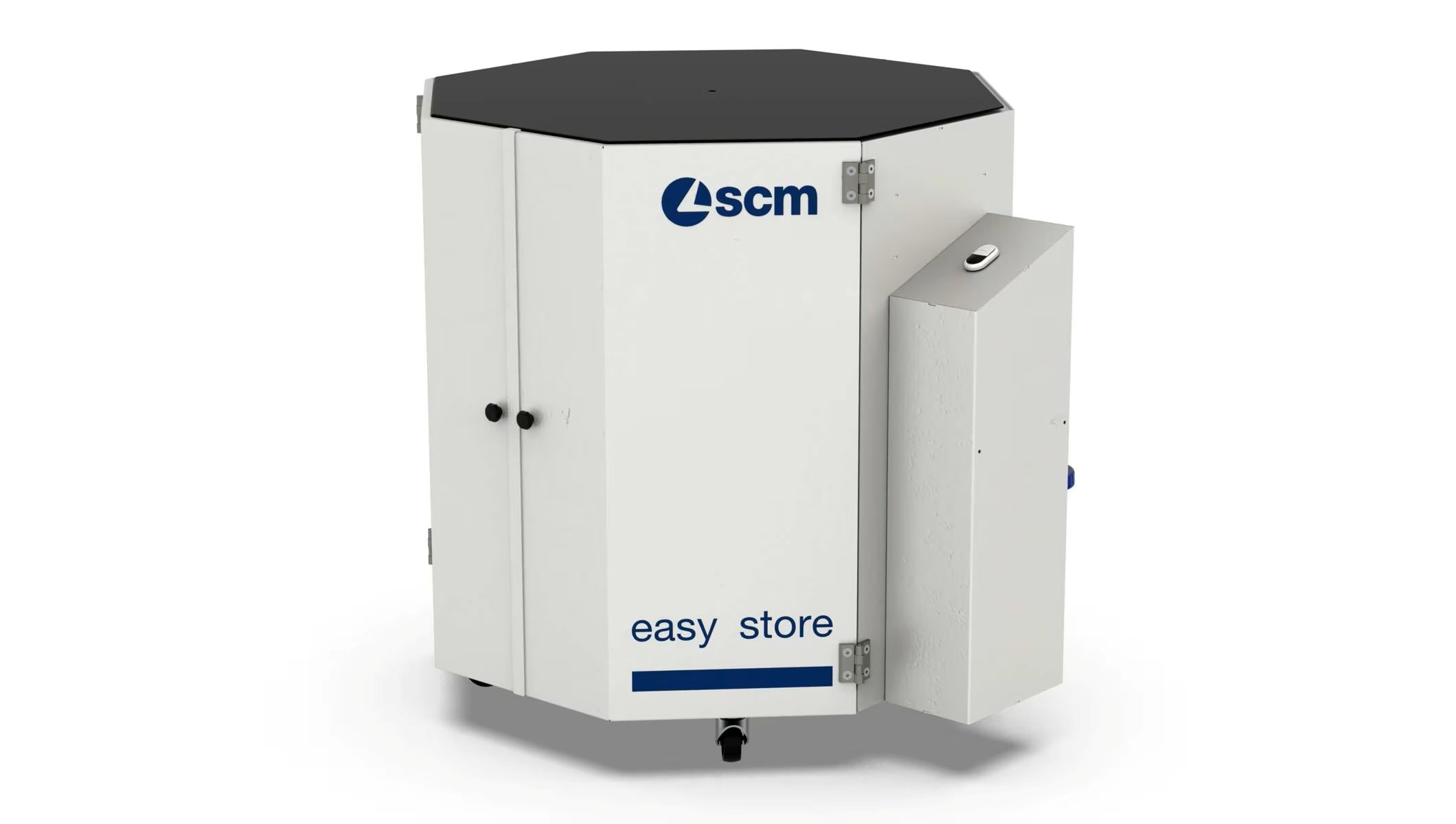
SCM Easy Store
Material Receiving & Storage
Production starts before the first cut. Panel inventory, hardware staging, drawer systems, edgebanding, adhesives, and finishing materials need organized receiving and storage.
Vertical and horizontal panel storage
Forklift, cart, and aisle planning
Material staging near cutting cells
02
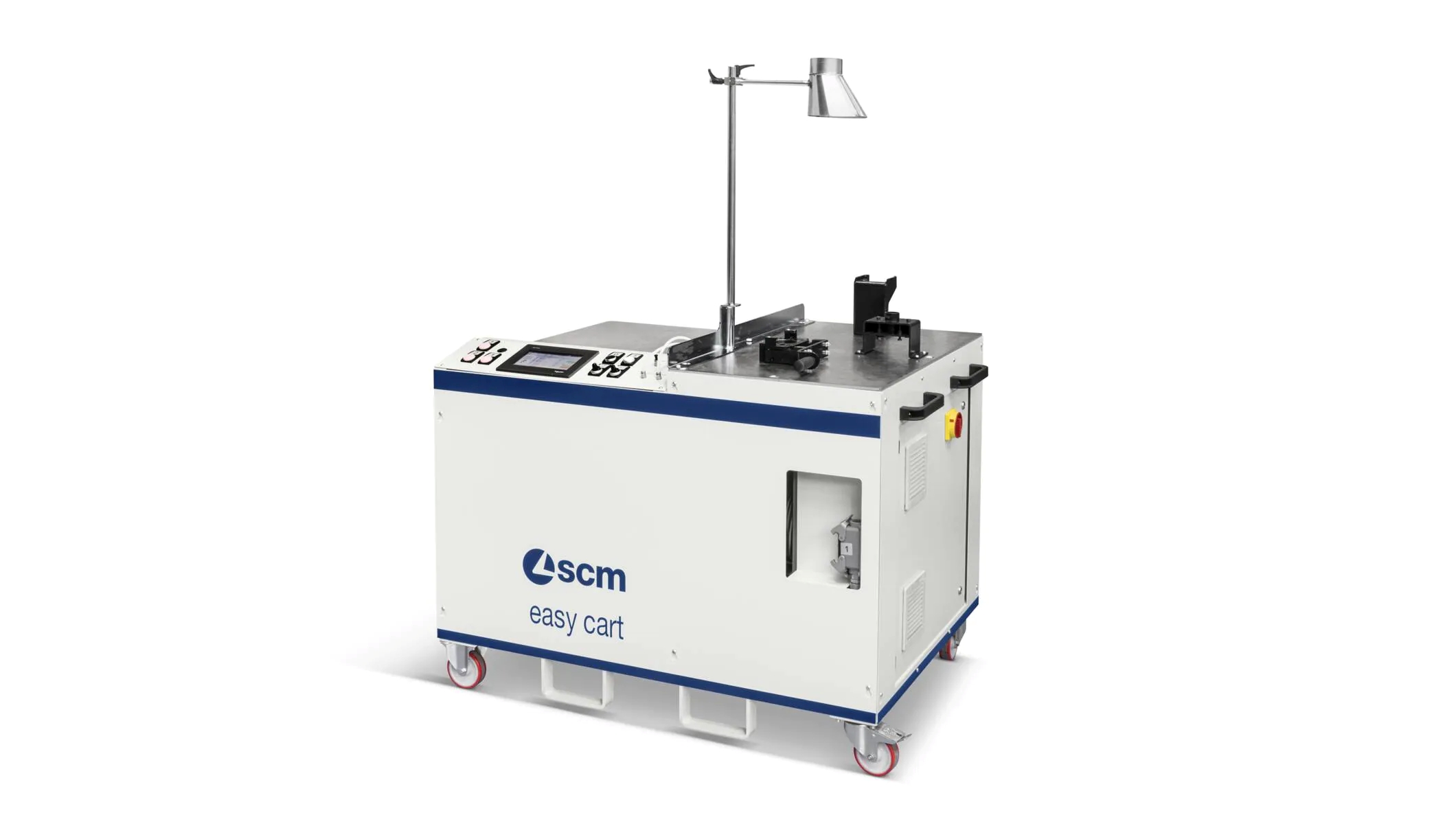
SCM Easy Cart
Panel Handling Systems
Large sheets are heavy, awkward, and labour-intensive. Proper handling reduces damage, protects operators, and keeps machines fed.
Vacuum lifters and jib cranes
Gantry loading systems
Roller carts and staging tables
03
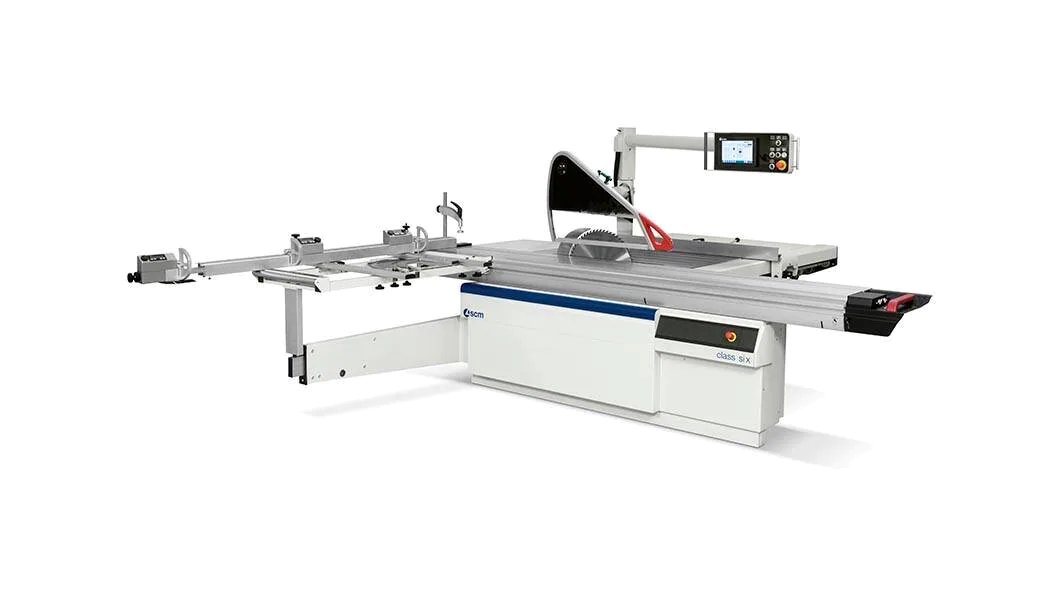
SCM Class SI X
Sliding Table Saws
Sliding table saws remain essential for custom shops, re-cuts, odd parts, prototypes, scribe pieces, fillers, end panels, and non-standard work that does not justify CNC setup.
Flexible custom cutting
Low-volume and specialty parts
Backup capacity for urgent work
04
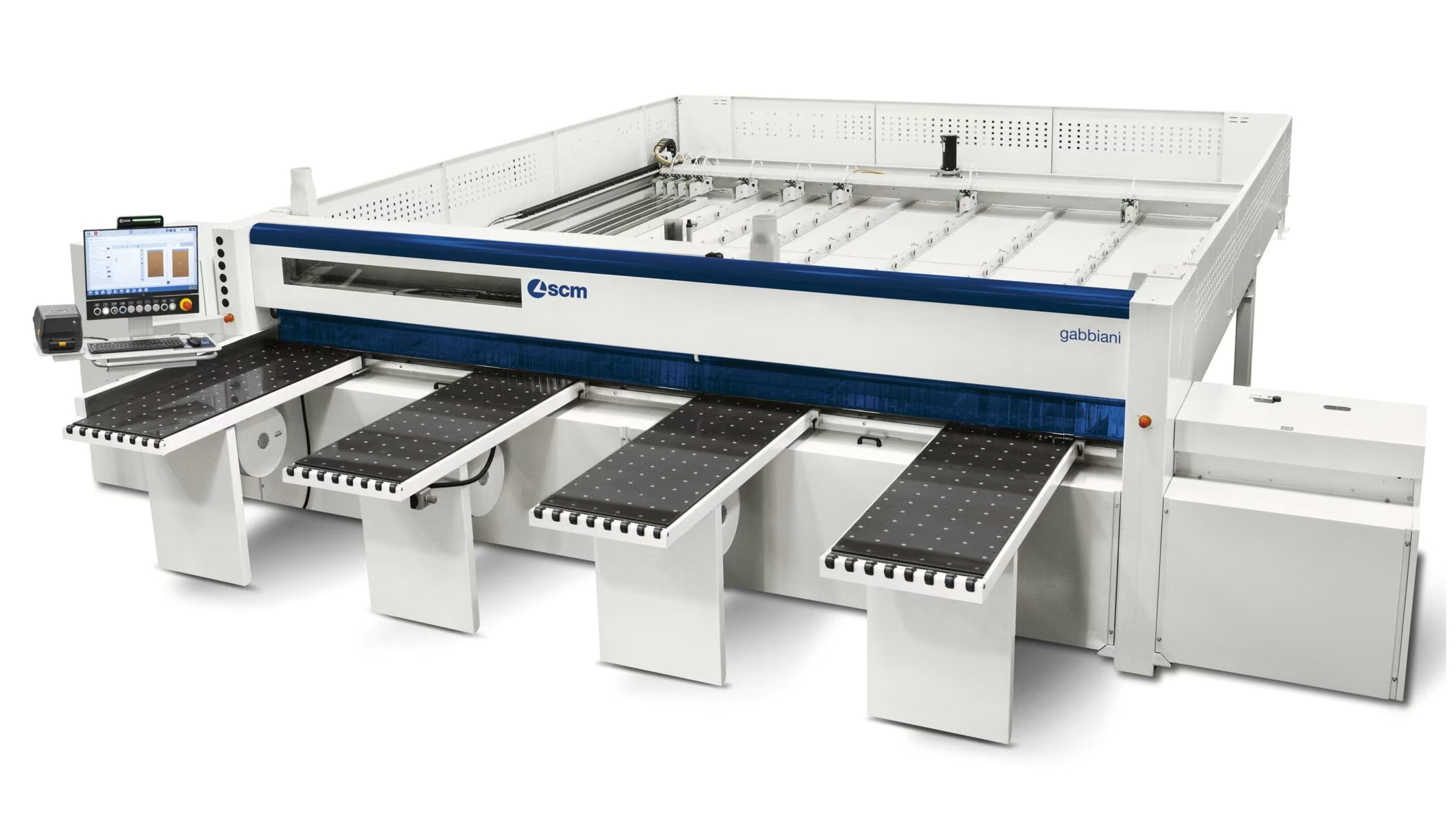
SCM Gabbiani S
Beam Saws
Beam saws bring speed and repeatability to rectangular panel breakdown. They are ideal when volume increases and operators need consistent, square, production-ready parts.
Stack cutting and batch processing
Consistent panel sizing
High-output cut-to-size workflows
05
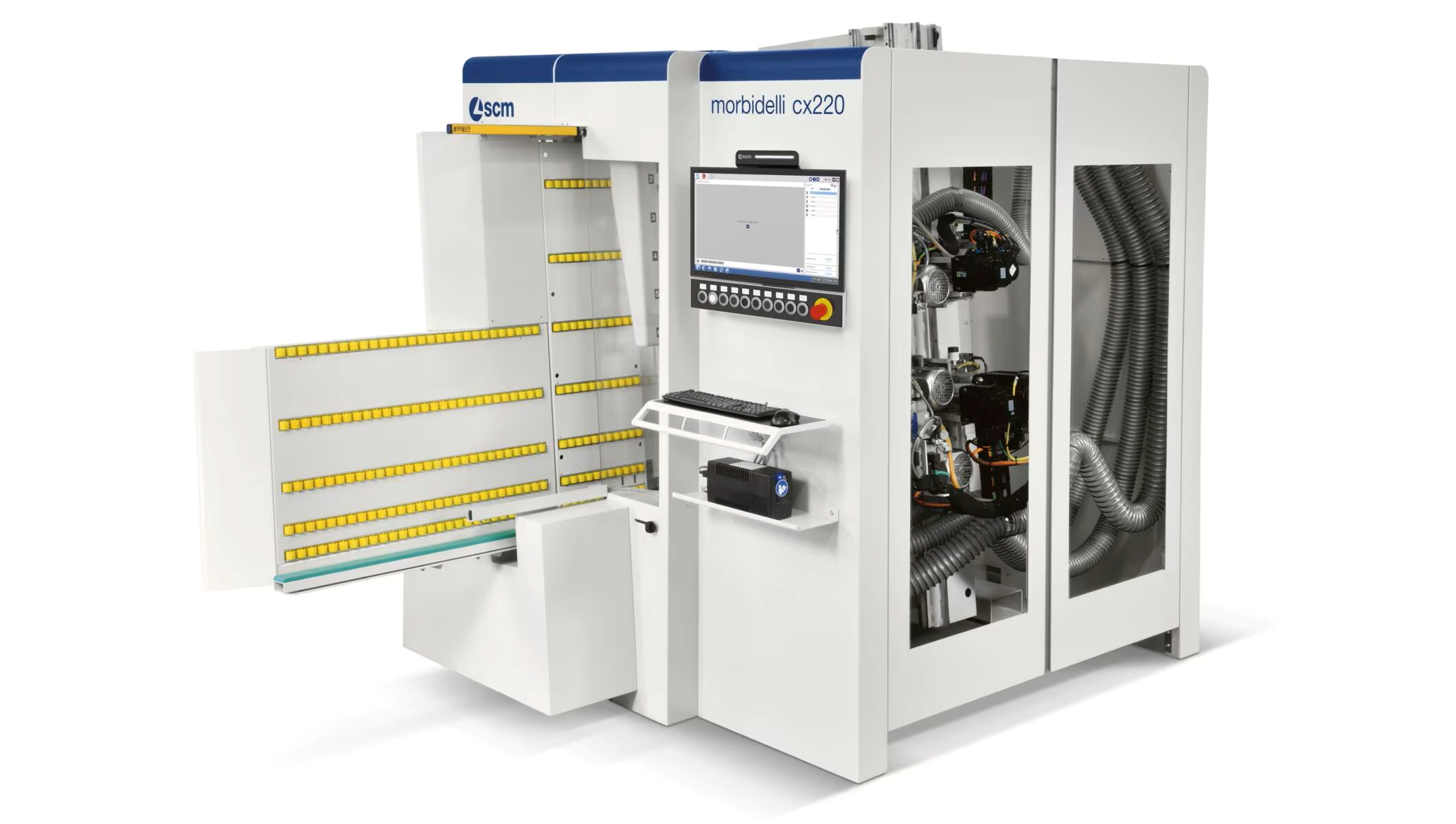
SCM Morbidelli CX220
Point-to-Point Machines
Point-to-point machining is valuable for drilling, routing, hinge boring, line boring, hardware prep, and repeatable secondary operations after panel sizing.
Horizontal and vertical drilling
Hardware-ready components
Excellent for cabinet box parts
06
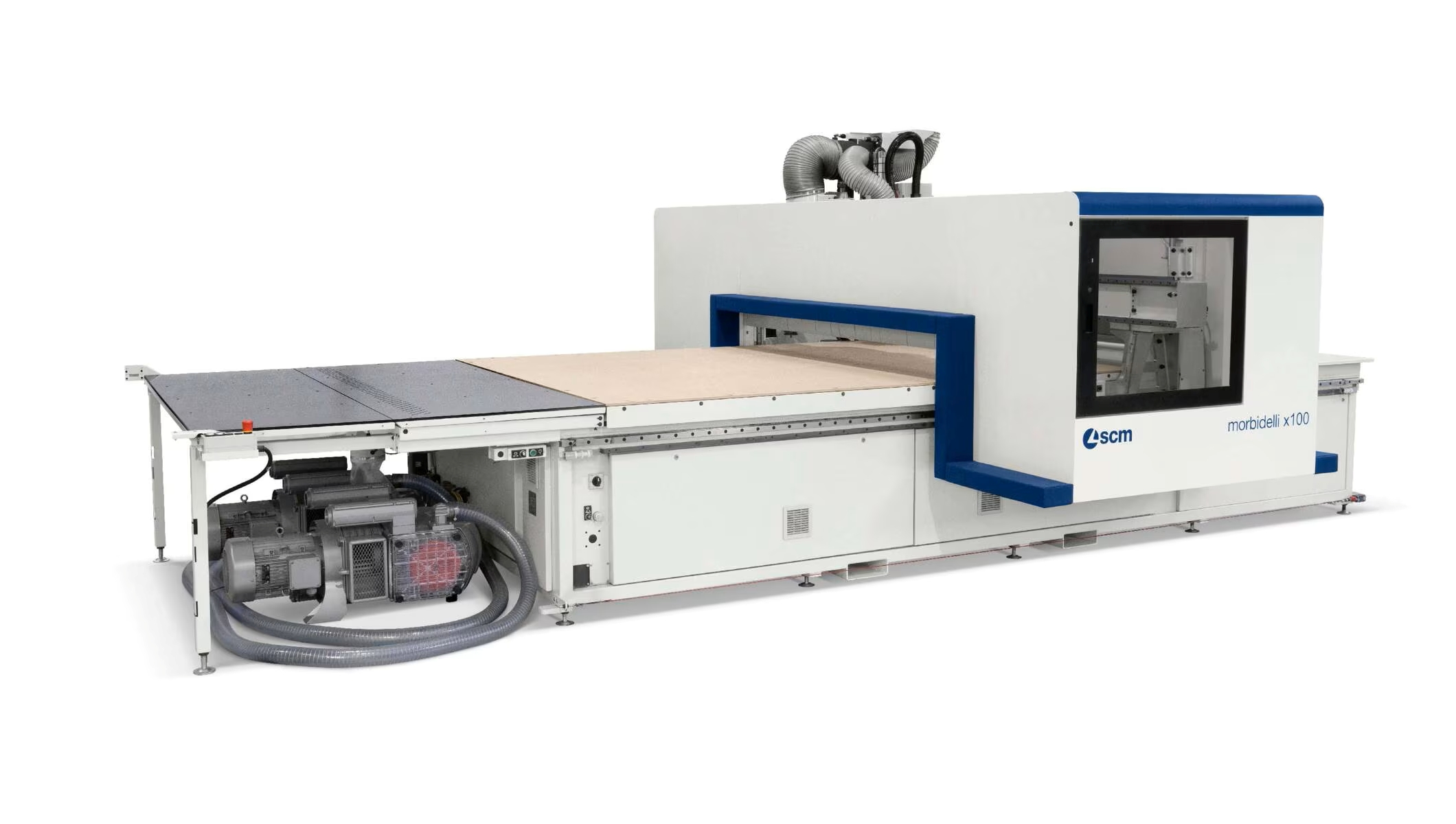
SCM Morbidelli X100
CNC Nesting Machines
CNC nesters combine cutting, drilling, grooving, pocketing, and shaping in one operation. They are ideal for flexible cabinet manufacturing, custom work, and mixed production.
Nested-based manufacturing
Custom parts without saw setup
High material yield optimization
07
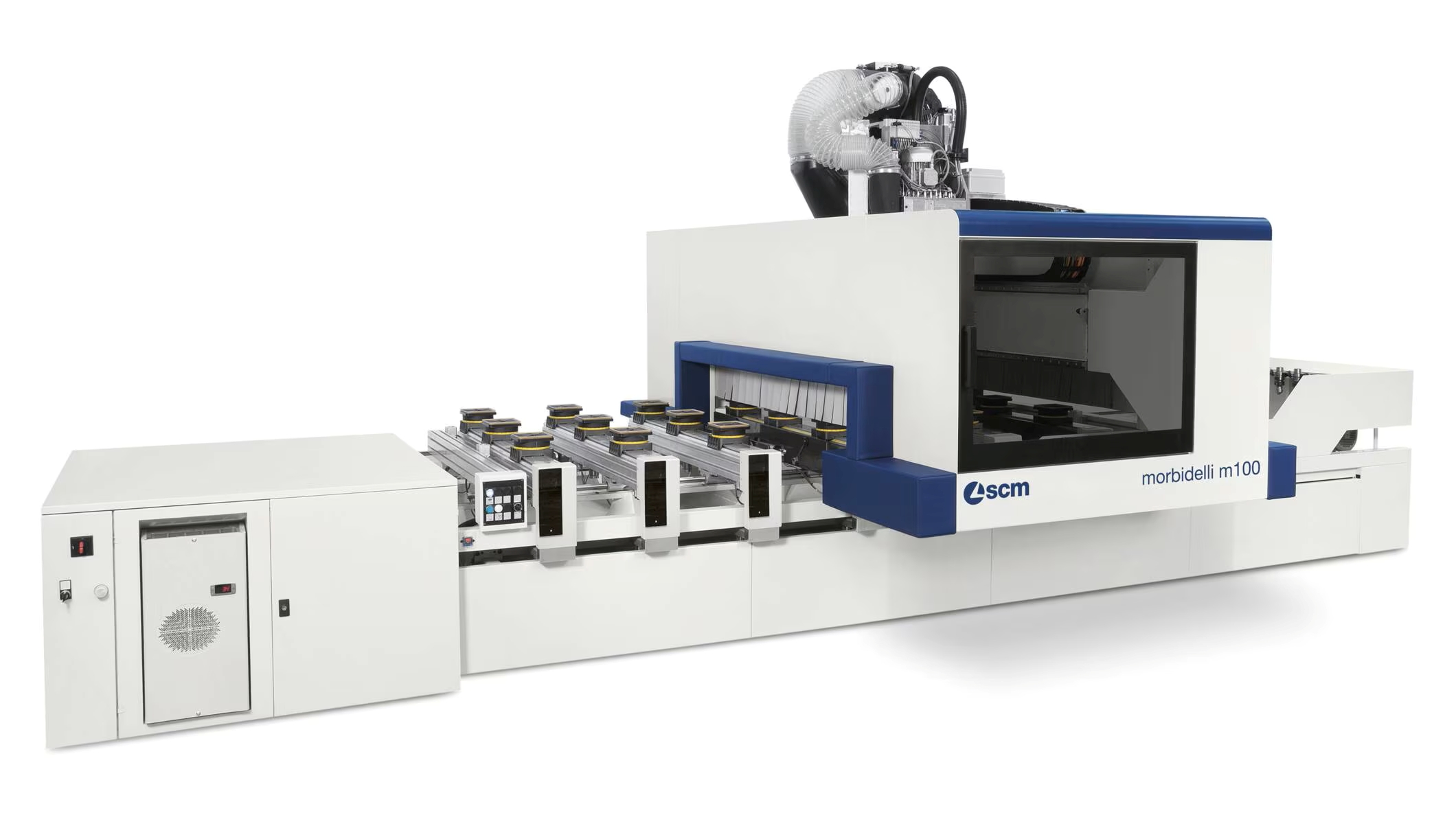
SCM Morbidelli M100 / M200
Single-Bed CNC Nesters
Single-bed nesters provide flexible production for custom shops, smaller batches, frameless cabinetry, commercial millwork, and mixed panel processing.
Lower footprint
Flexible job sequencing
Good fit for growing shops
08
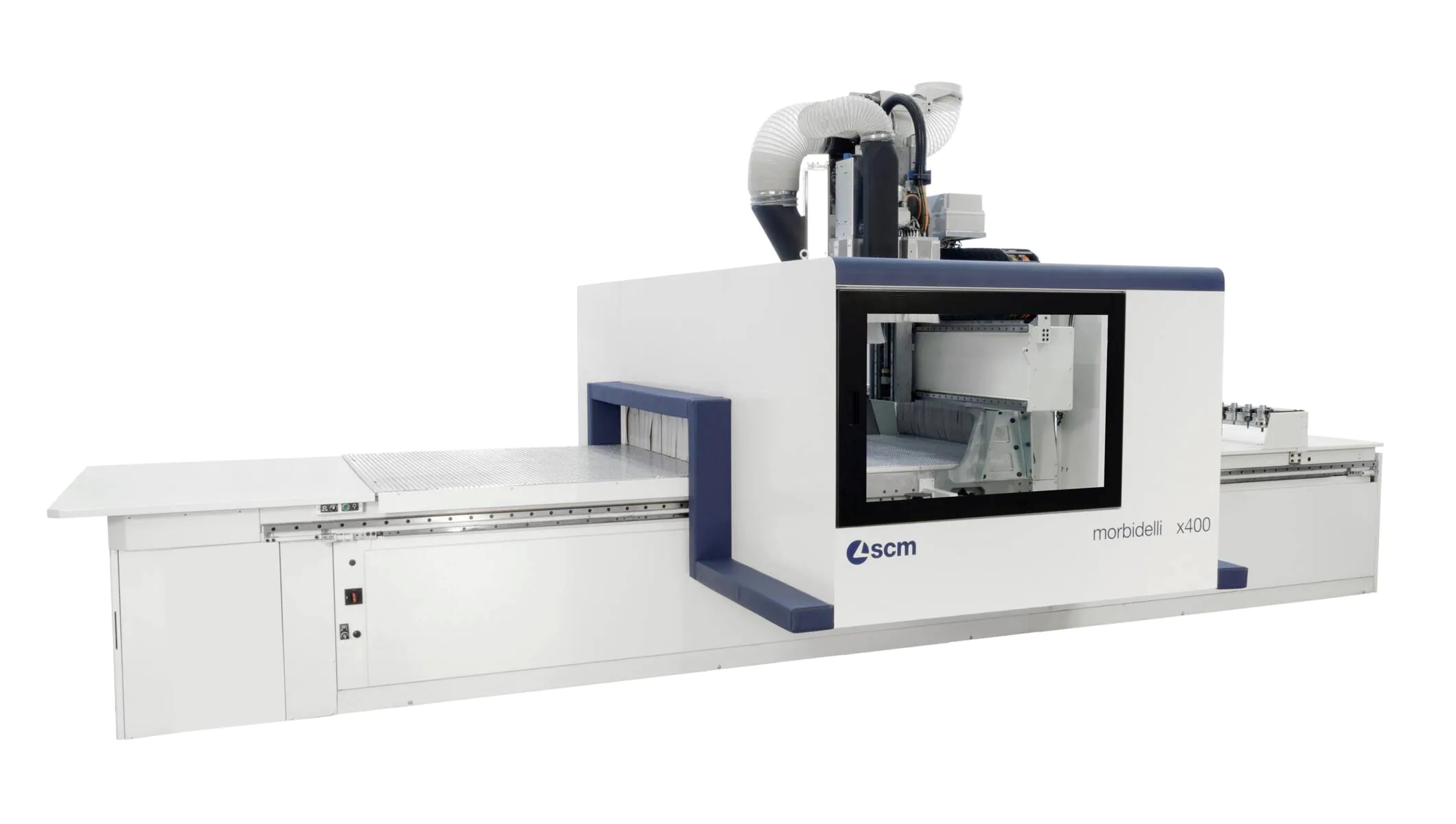
SCM Morbidelli X200 / X400
Double-Bed CNC Nesters
Double-bed CNCs increase throughput by allowing one bed to be unloaded and reloaded while the other is cutting. This reduces spindle idle time and increases shift output.
Higher uptime
Better operator efficiency
Ideal for higher-volume shops
09
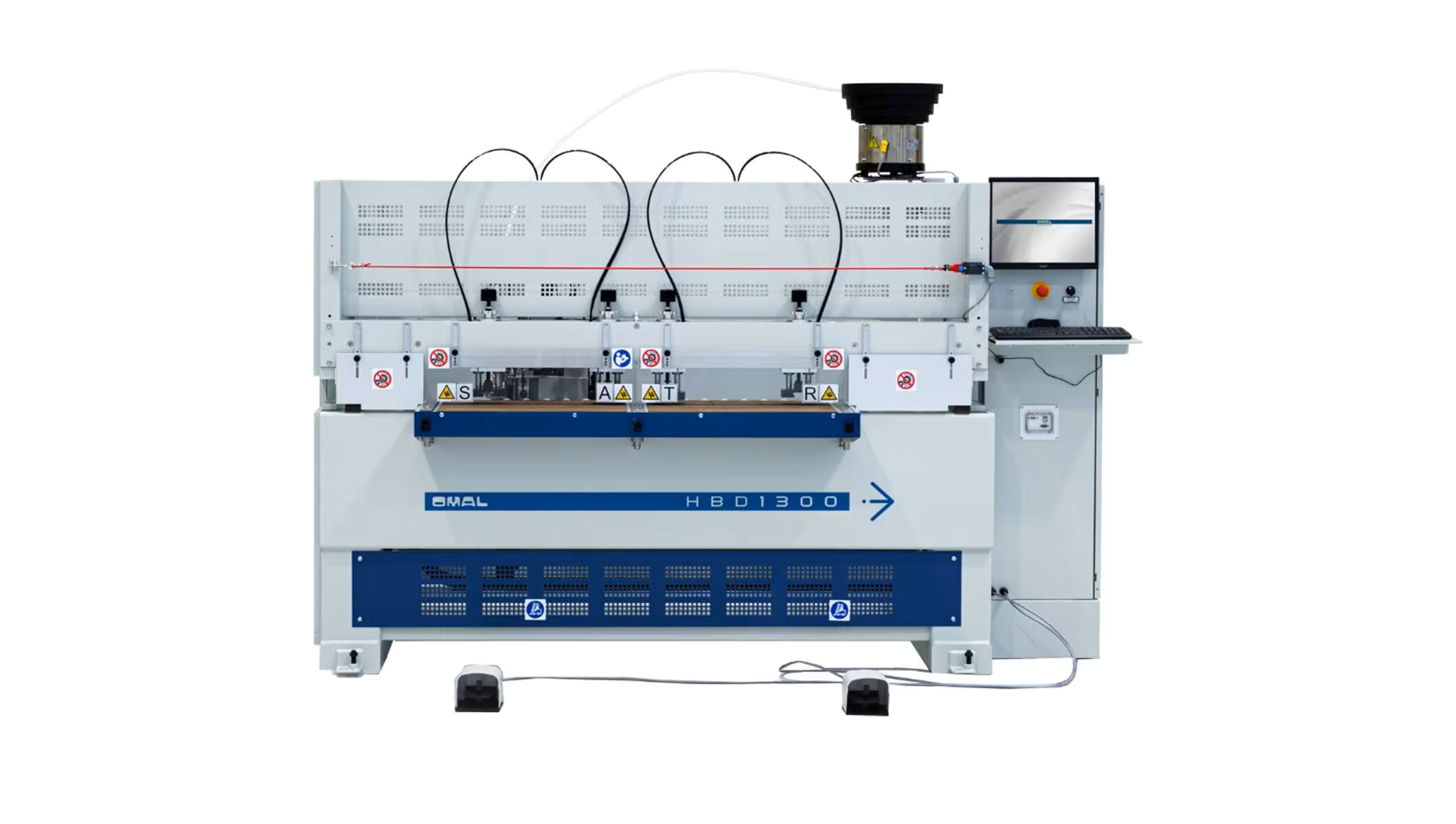
SCM OMAL HBD 1300
Dowel Drilling & Insertion
Automated dowel insertion improves cabinet construction speed and repeatability. It reduces manual gluing, improves alignment, and supports fast case assembly.
Horizontal drilling
Glue and dowel insertion
Stronger repeatable case joinery
10
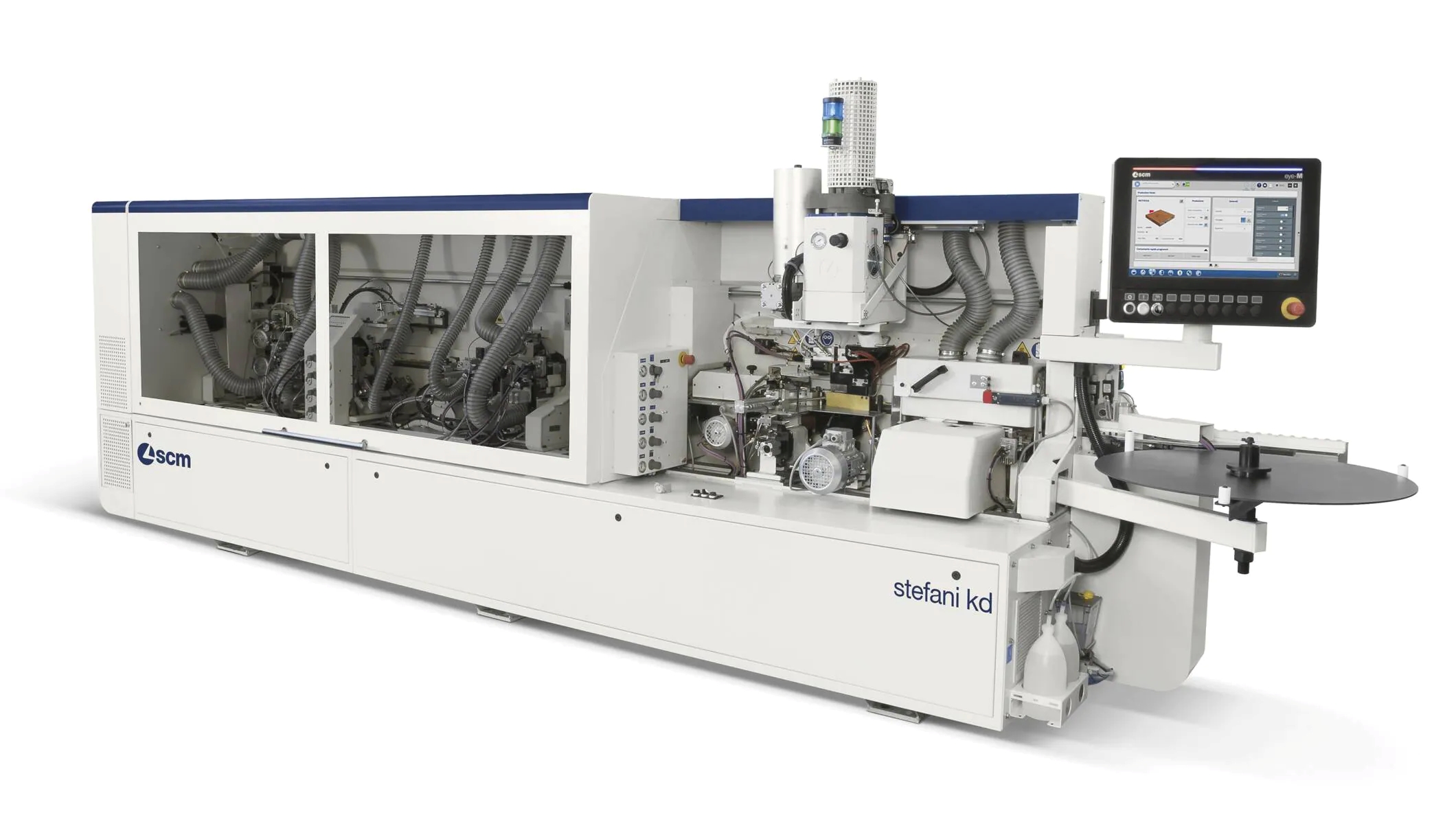
SCM Stefani KD
Edge Banding Stations
Edge banding is one of the most critical quality points in cabinet manufacturing. Glue control, pressure, trimming, scraping, buffing, and part handling all affect the final product.
Straight-line edgebanders
Pre-milling and corner rounding
Scraping, buffing, and glue-line control
11
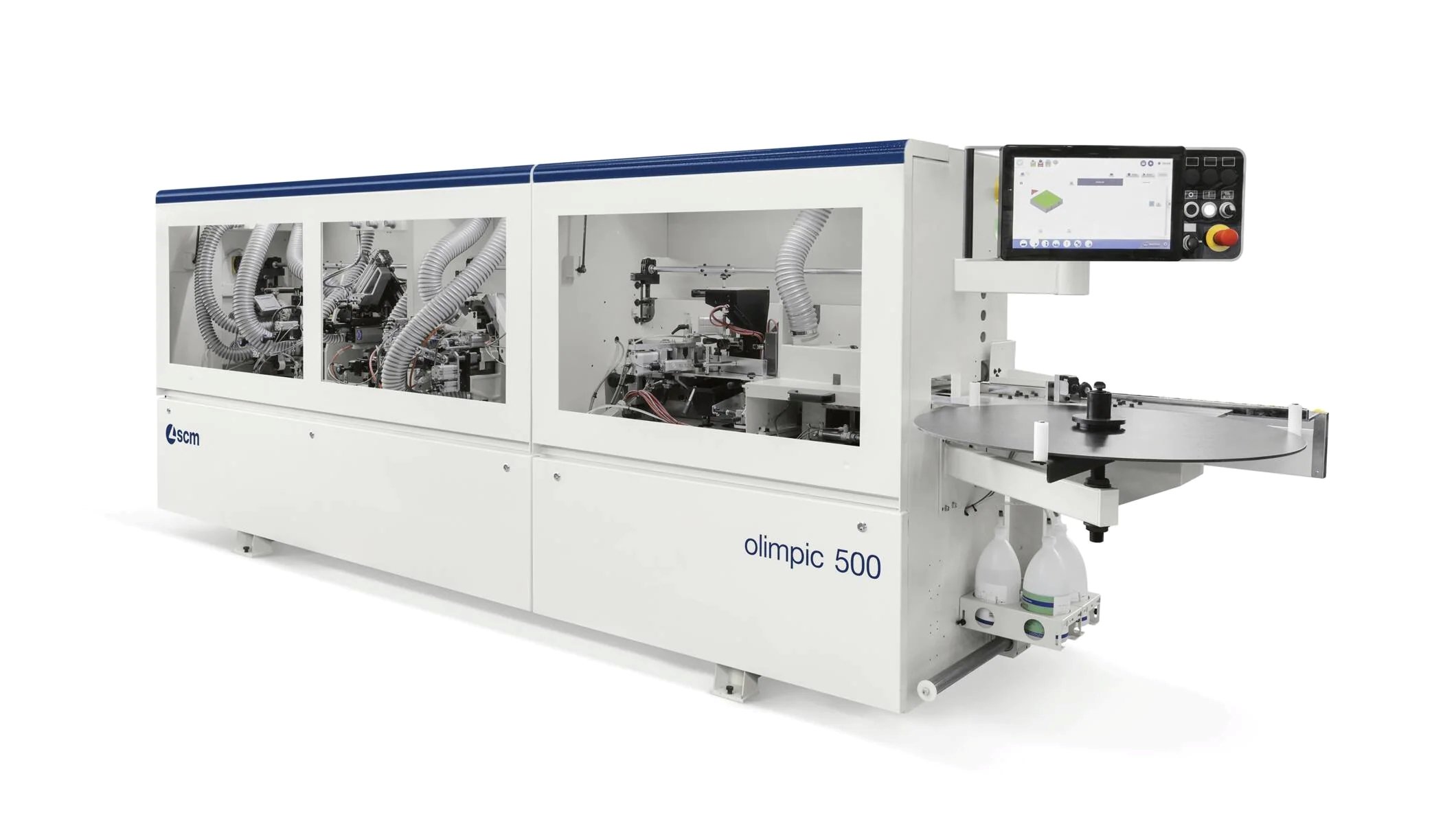
SCM Olimpic 500
Secondary Edge Finishing
Larger shops often separate high-speed edge banding from inspection and secondary finishing to keep the bander moving while still maintaining quality.
Manual cleanup stations
Touch-up and inspection benches
Specialty edges and furniture-grade parts
12
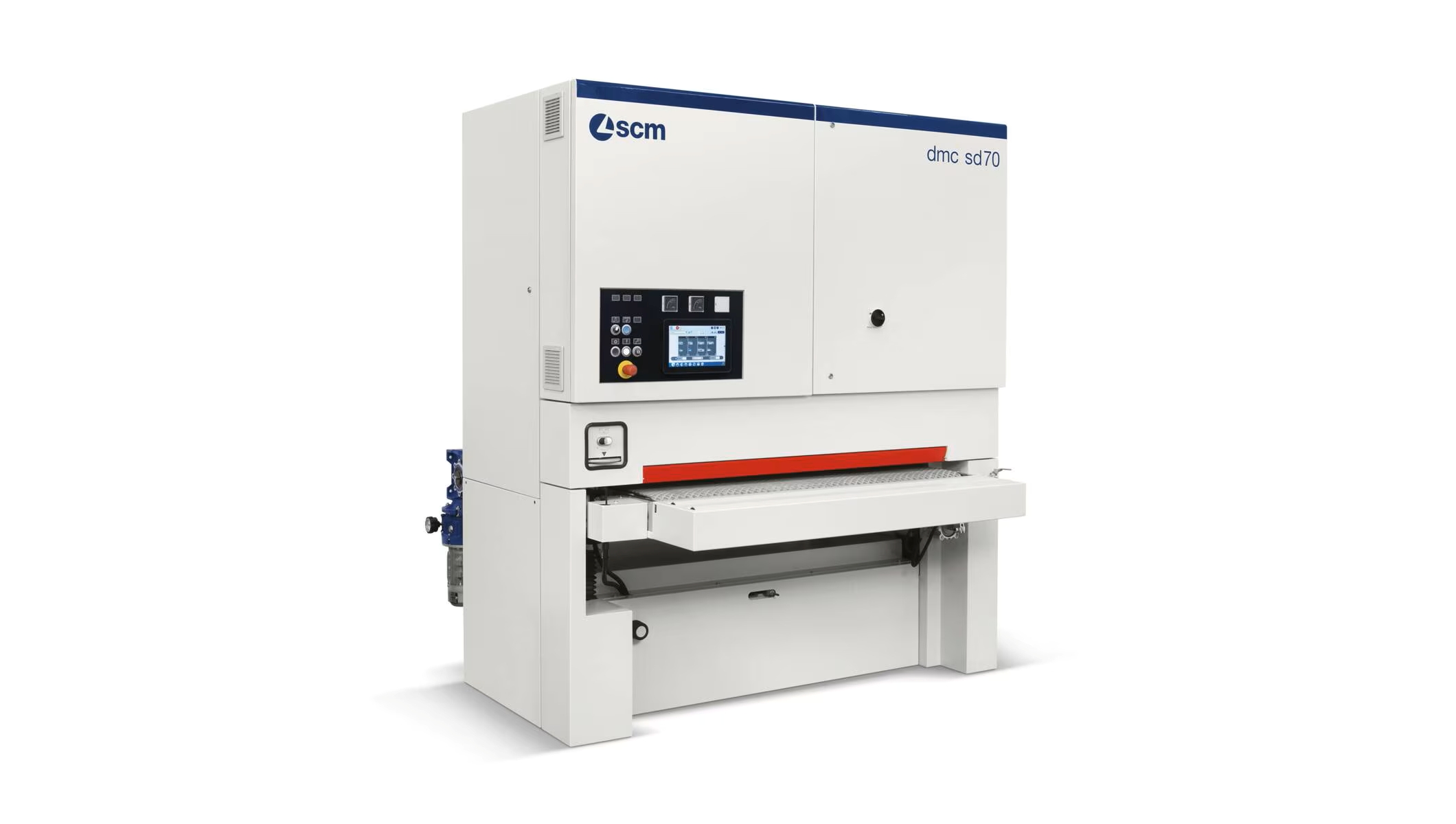
SCM DMC SD 70
Sanding & Surface Prep
Sanding capacity needs to match finishing demand. Wide-belt sanders, orbital stations, profile sanding, and quality inspection determine final finish consistency.
Wide-belt sanding
Calibration and finish prep
Door, panel, and component sanding
13
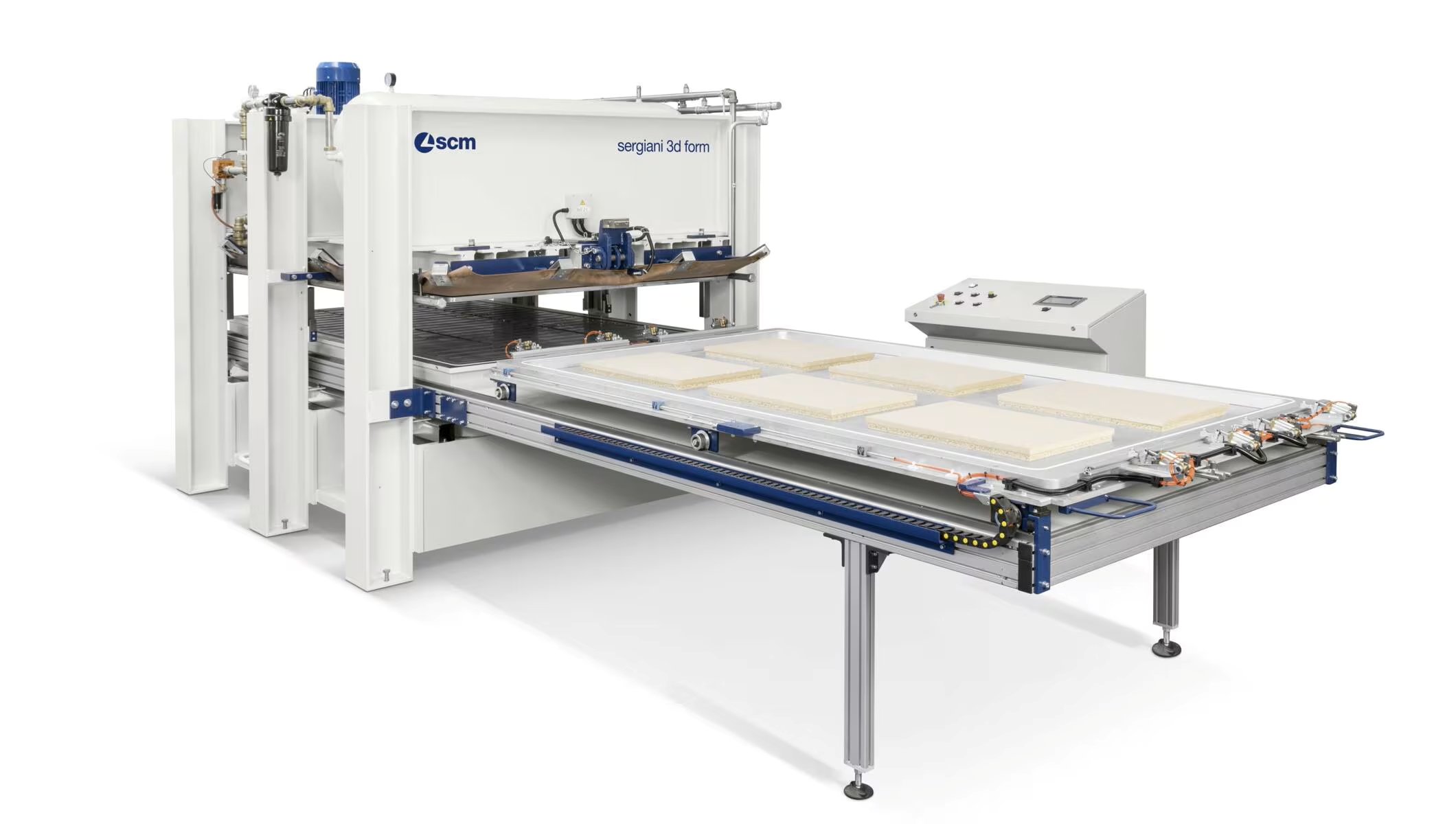
SCM Sergiani 3D Form
Paint Lines & Finishing Systems
Finishing can become one of the biggest bottlenecks in a cabinet shop. Spray booths, drying racks, curing systems, sanding between coats, and material flow must be planned carefully.
Spray booths and automated lines
Drying and curing zones
Flatline and batch finishing workflows
14
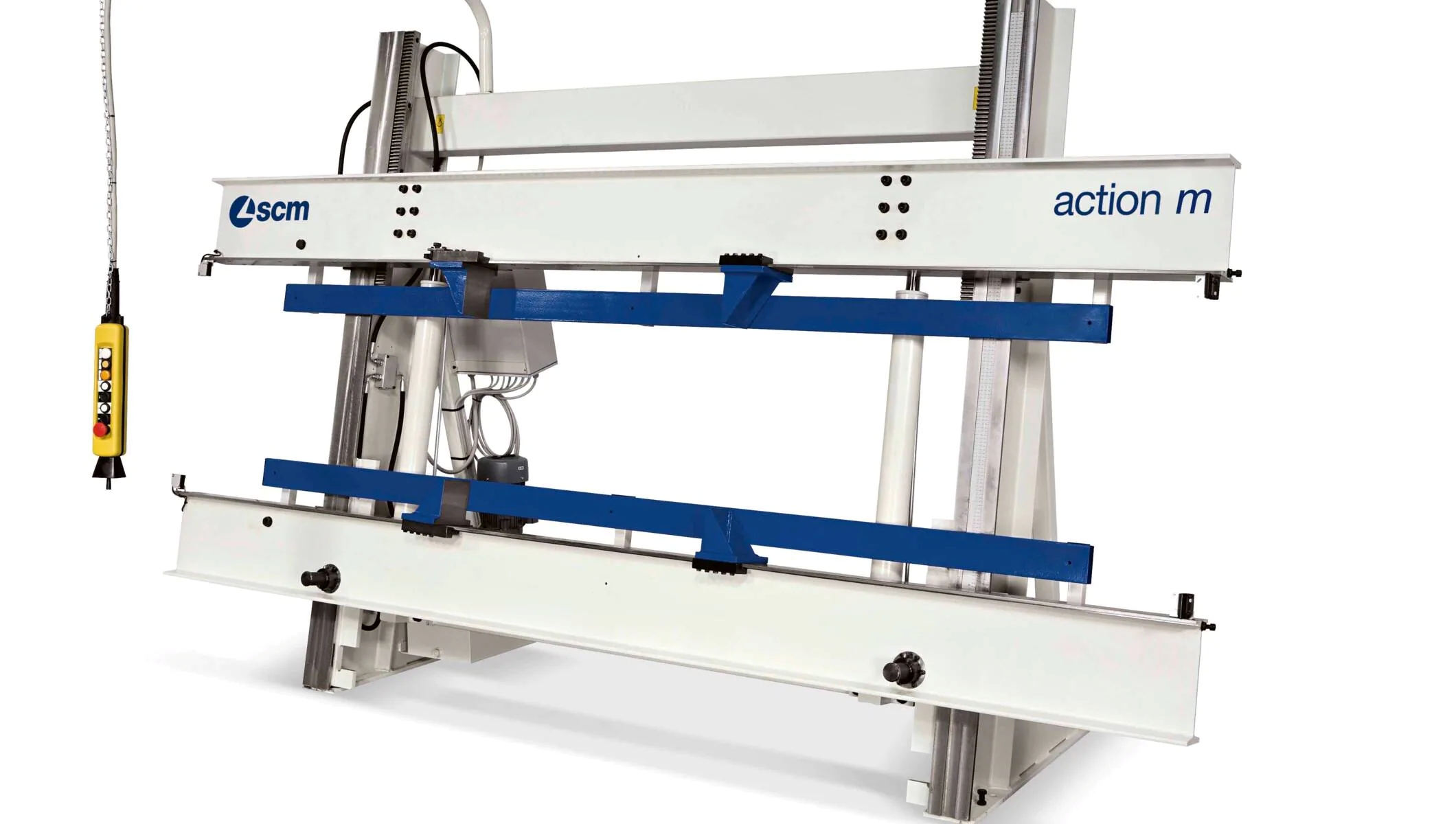
SCM Action M
Assembly Benches & Cells
Assembly should not be an afterthought. Ergonomic benches, hardware staging, part carts, barcode tracking, and clear flow reduce confusion and improve output.
Dedicated cabinet assembly cells
Hardware and fastener staging
Part carts and job-based kitting
15
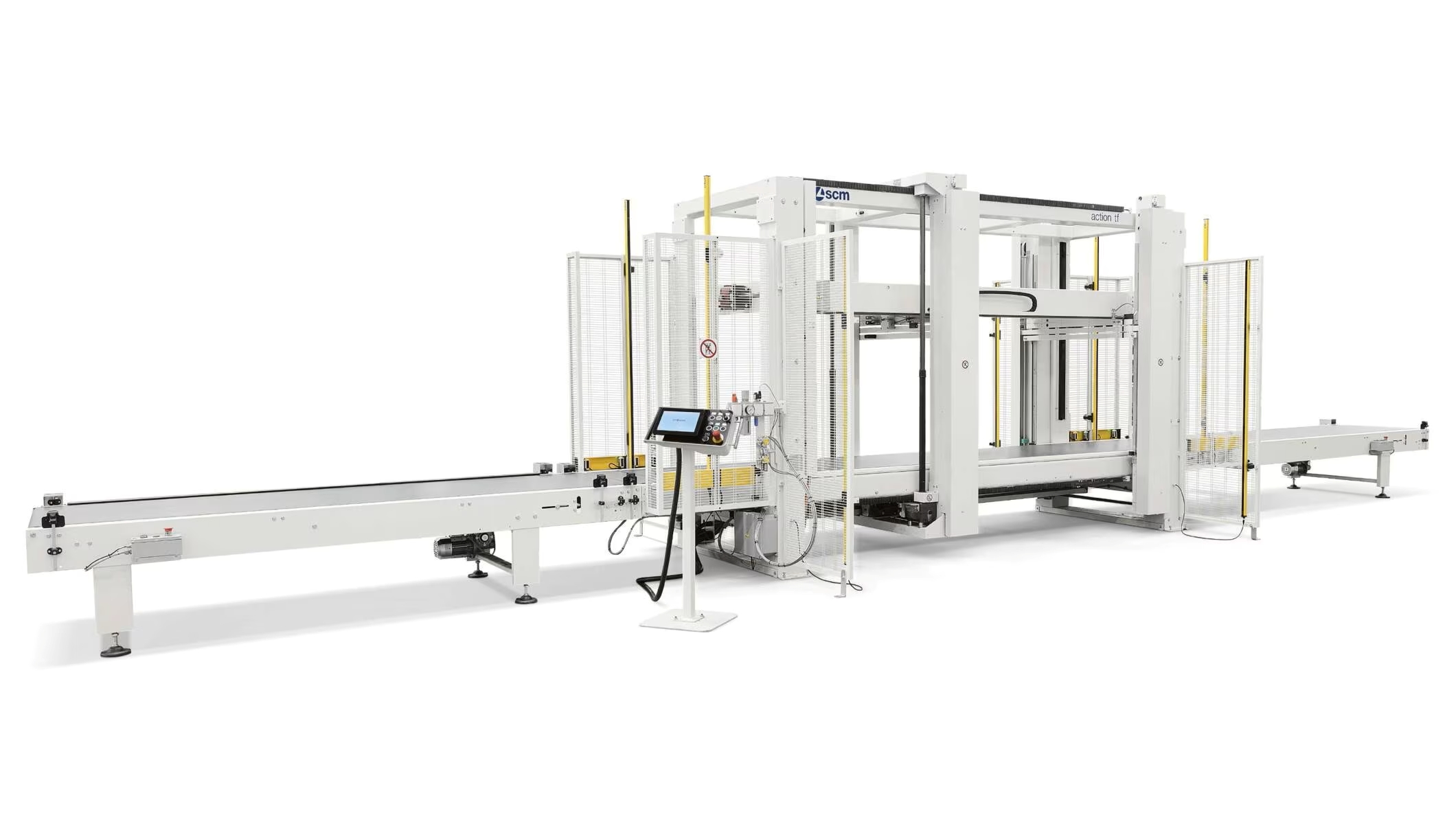
SCM Action TF
Case Clamps
Case clamps speed up box assembly and improve squareness. For frameless cabinetry, case clamps help turn machined parts into consistent cabinets with less manual adjustment.
Square cabinet construction
Repeatable clamping pressure
Improved assembly throughput
16
SCM Easy Cart
Gravity Conveyors
Gravity conveyors are simple, effective tools for moving parts between workstations without tying up forklifts or operators. They are especially useful near saws, banders, and assembly.
Low-cost material movement
Reduced carrying and lifting
Cleaner workstation transitions
17
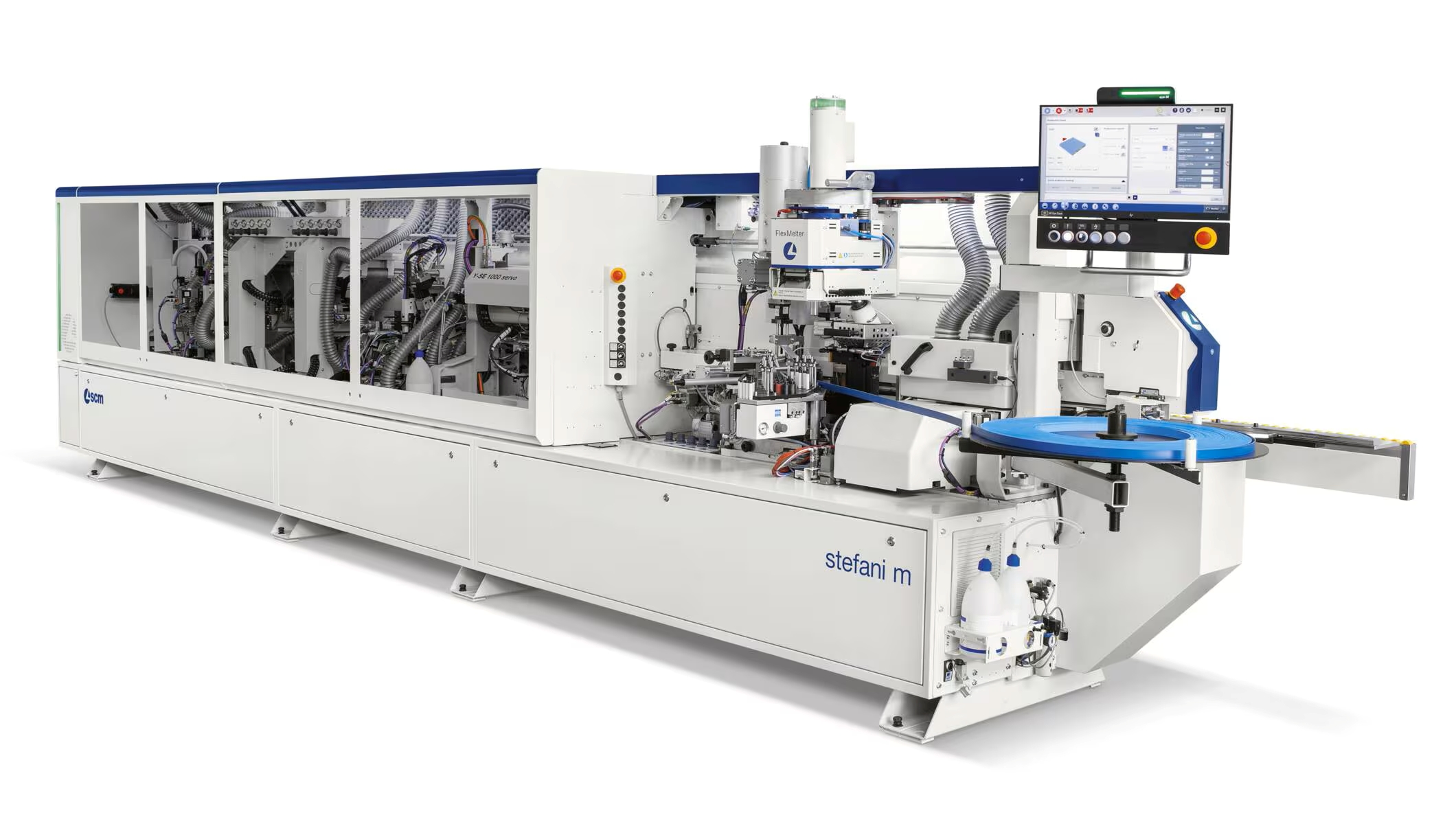
SCM Stefani M + Return
Powered Conveyors & Return Systems
Higher-volume shops can benefit from powered conveyors, return systems, and controlled infeed/outfeed zones that reduce labour and keep machines running continuously.
Edgebander return systems
Powered roller conveyors
Continuous production flow
18
SCM Easy Store
Cranes, Lifters & Loading
Cranes, vacuum lifters, scissor lifts, and loading systems reduce operator strain and speed up the movement of full sheets, bundles, finished panels, and oversized parts.
Jib cranes and gantry cranes
Vacuum loading arms
Safer handling of heavy panels
19
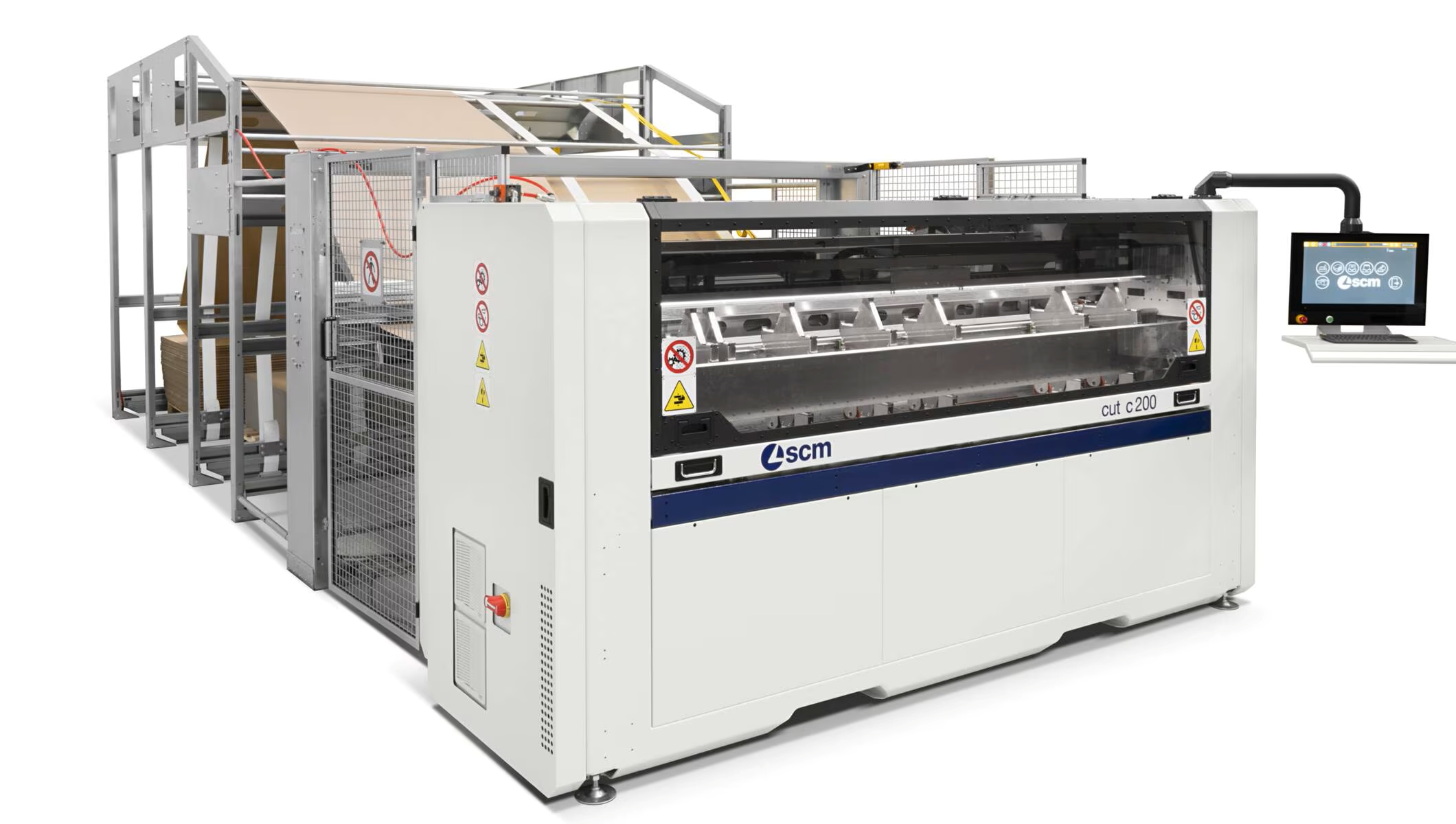
SCM Cut C 200
Packaging & Shipping
Packaging protects the value created upstream. Finished cabinets, doors, panels, and parts need staging, wrapping, labelling, and loading processes that prevent damage.
Job-based staging zones
Protective wrapping systems
Delivery and install sequencing
20
SCM Maestro + Morbidelli X100
Software Integration
Machine performance depends on clean data. Design software, optimization, labels, CNC output, cutlists, purchasing, inventory, and reporting should connect wherever possible.
CAD/CAM workflow support
Barcode and label planning
Production reporting and KPIs
Machine Planning
Scaling the Shop Without Creating New Bottlenecks
Adding a new machine should improve the system, not just one workstation. A high-speed edgebander creates no value if parts are not staged properly. A double-bed CNC loses its advantage if one operator is constantly hunting for sheets. A beam saw can overwhelm edgebanding if batching, carts, and downstream labour are not planned correctly.
Titan looks at machine planning through the lens of flow: where material enters, where it waits, how it moves, how many operators touch it, where quality is checked, and where bottlenecks will appear as volume increases.
Raw Panel FlowReceiving, storage, staging, lifting, loading, cutting, nesting, and offloading.
Machining FlowSawing, routing, drilling, grooving, hinge boring, dowelling, and hardware preparation.
Edge FlowEdgebanding, trimming, scraping, buffing, inspection, touch-up, and rework control.
Assembly FlowKitting, bench assembly, case clamping, drawer installation, hardware staging, and QC.
Finishing FlowSanding, spraying, drying, curing, flatline finishing, batch finishing, and post-finish handling.
Panel Processing Strategy
For cabinet shops, panel processing is the foundation of throughput. Some shops need the flexibility of CNC nesting because every job is different. Others benefit from a beam saw feeding a point-to-point cell because their parts are more rectangular and repeatable. Many larger operations need both: beam saws for high-volume rectangular breakdown and nesters for shaped, grooved, drilled, or custom parts.
Single-Bed vs. Double-Bed Nesting
A single-bed CNC can be the right fit when job volume is moderate, floor space is tight, or production changes constantly. A double-bed CNC becomes valuable when the spindle needs to stay cutting while the operator unloads, labels, cleans, and reloads the second table. The machine planning question is not just spindle power. It is whether the shop can stage material, offload parts, manage spoilboards, and keep the CNC continuously fed.
Edgebanding as a Production Constraint
Edgebanders often become the true heartbeat of cabinet production. If the edge station falls behind, CNC and saw output piles up. If glue-line quality is inconsistent, the shop creates rework that damages margin. Titan helps shops think through bander selection, infeed and outfeed length, return systems, operator access, dust extraction, tooling condition, glue technology, and secondary edge finishing stations.
Material Handling Is Production Equipment
Carts, conveyors, cranes, vacuum lifters, panel loaders, gravity rollers, and staging racks are not accessories. They determine whether operators spend their day producing or moving material. In high-volume cabinet manufacturing, material handling becomes one of the easiest ways to reduce labour strain, improve safety, and increase output without immediately adding more machine capacity.
Design. Plan. Scale.
High-Volume Cabinet Production Requires System Thinking
Scaling a cabinet shop is not simply adding more equipment. It requires understanding product mix, order volume, panel types, cut patterns, edge requirements, finishing demand, labour skill, available space, service access, electrical requirements, compressed air, dust collection, and future expansion.
Titan helps manufacturers evaluate the complete production path before committing to equipment. That means identifying whether the next investment should be a faster edgebander, a beam saw, a nester, a second CNC, a dowel inserter, a case clamp, better conveyors, improved dust extraction, or simply a smarter layout.
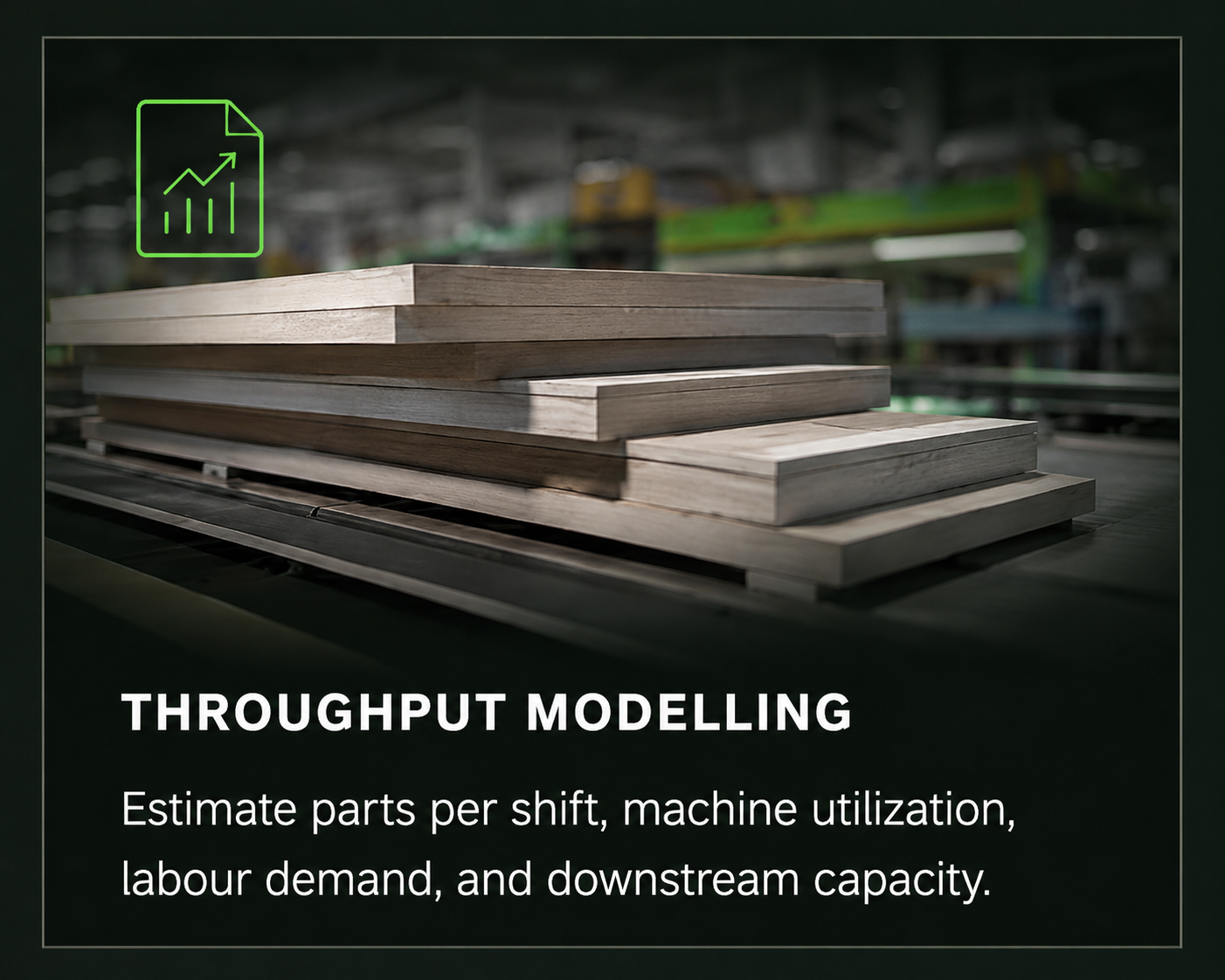
Throughput ModellingEstimate parts per shift, machine utilization, labour demand, and downstream capacity.
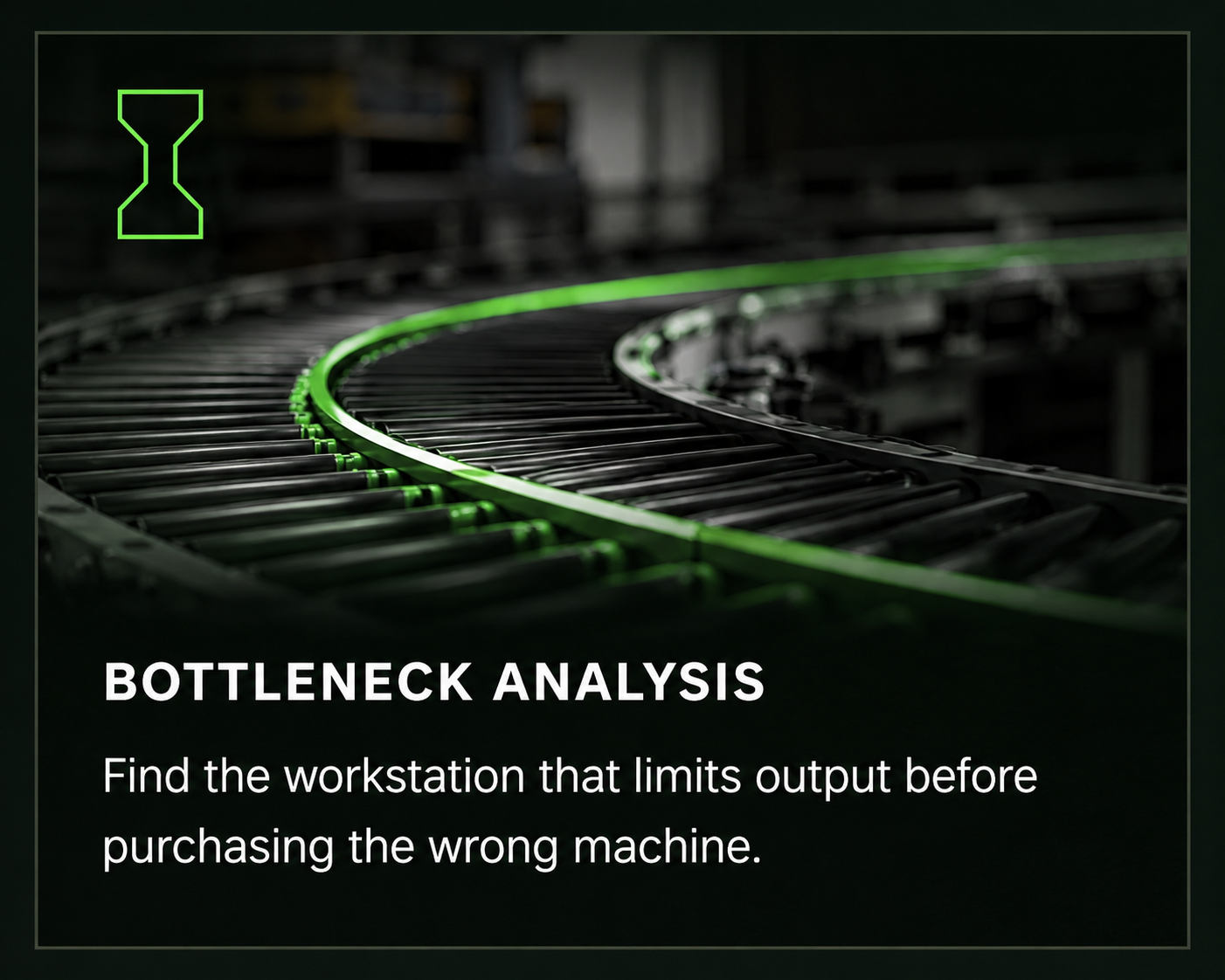
Bottleneck AnalysisFind the workstation that limits output before purchasing the wrong machine.
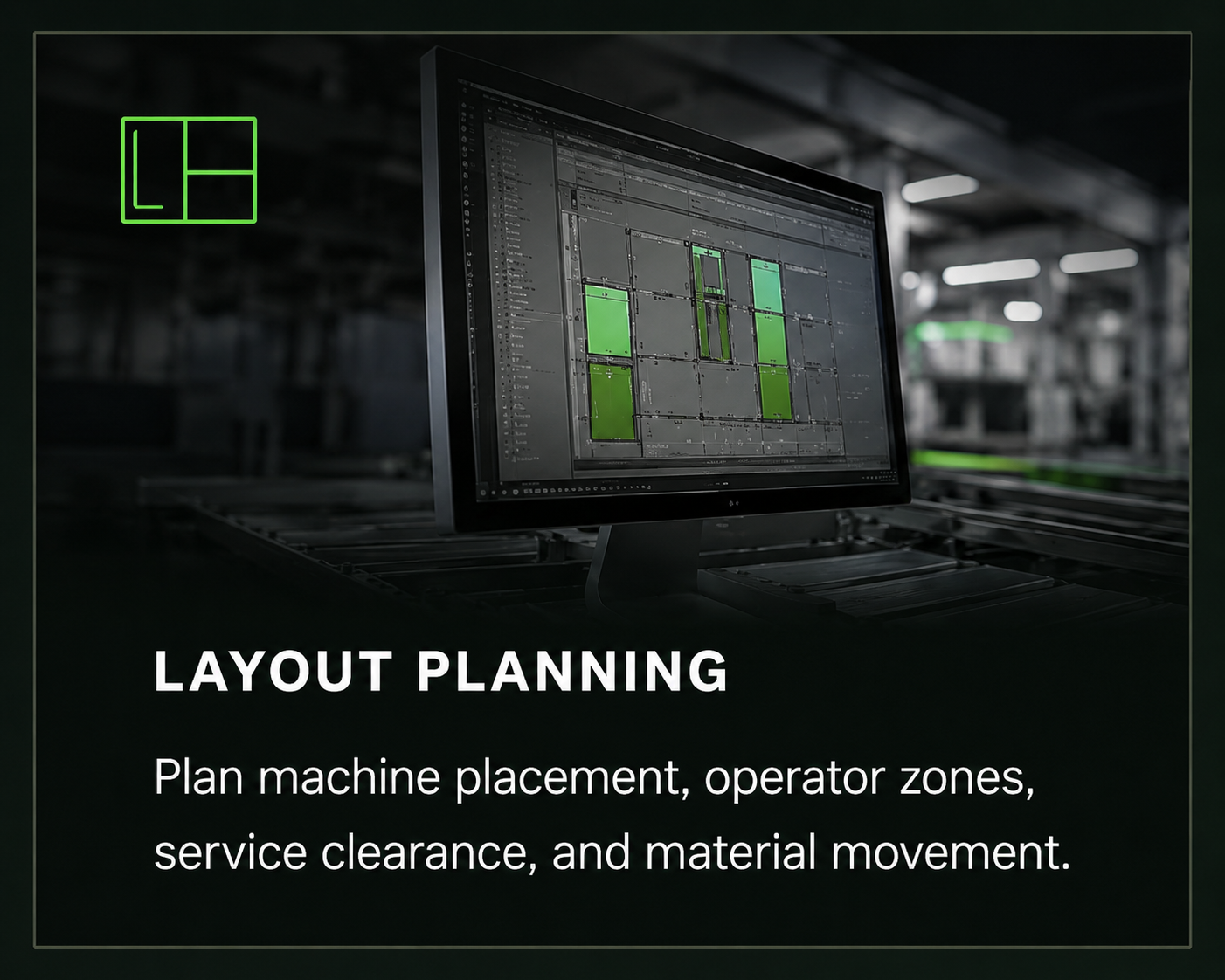
Layout PlanningPlan machine placement, operator zones, service clearance, and material movement.
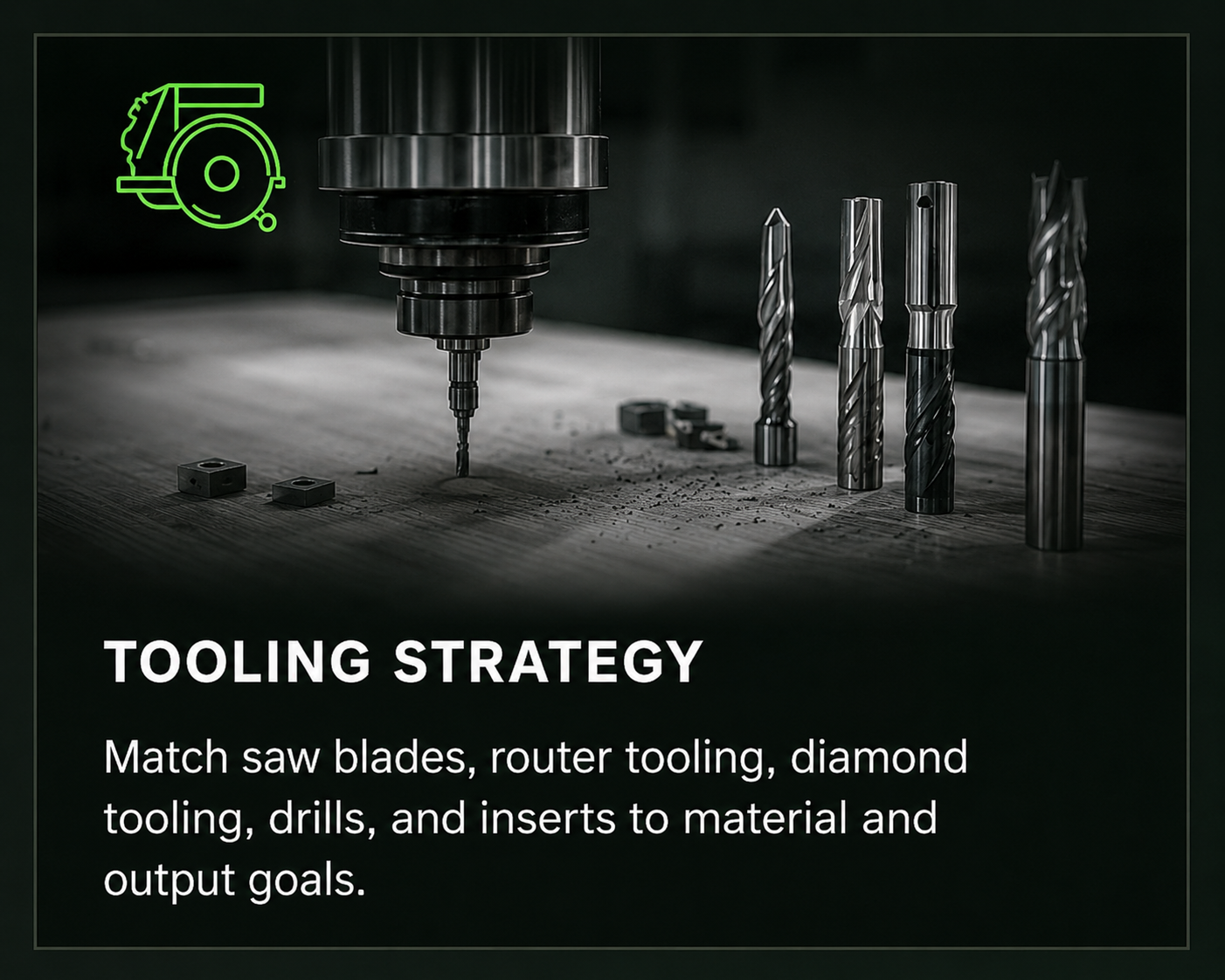
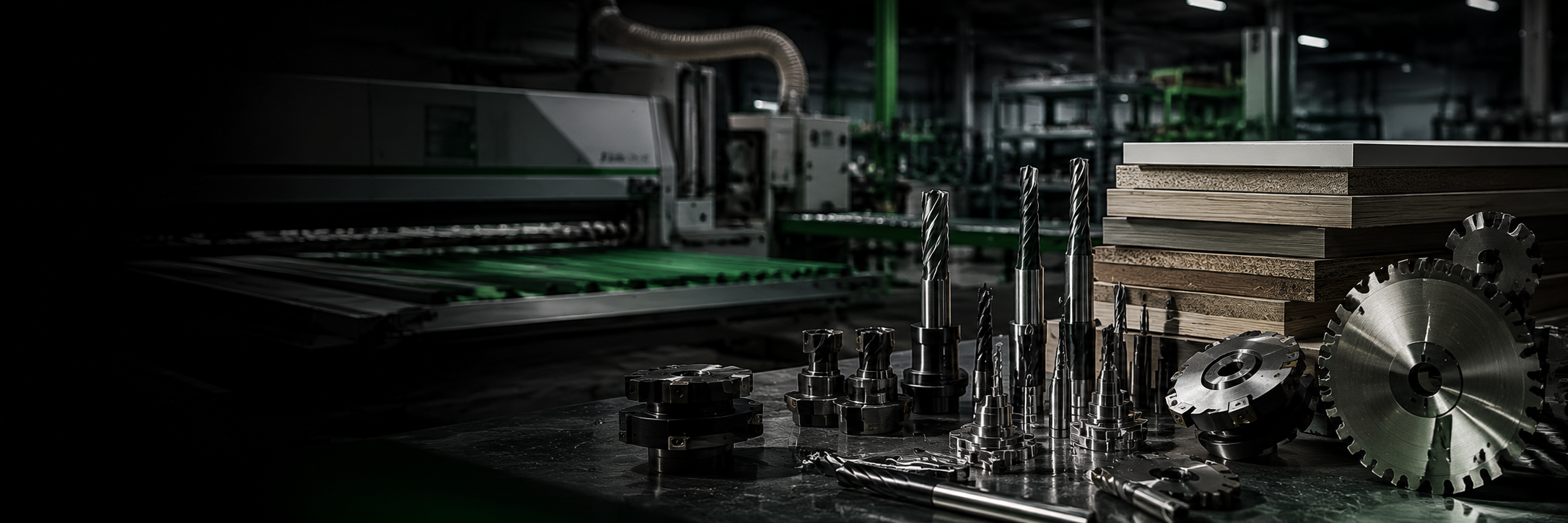
Tooling StrategyMatch saw blades, router tooling, diamond tooling, drills, and inserts to material and output goals.
Service AccessPlan installation, maintenance access, dust ports, air drops, electrical feeds, and future expansion.
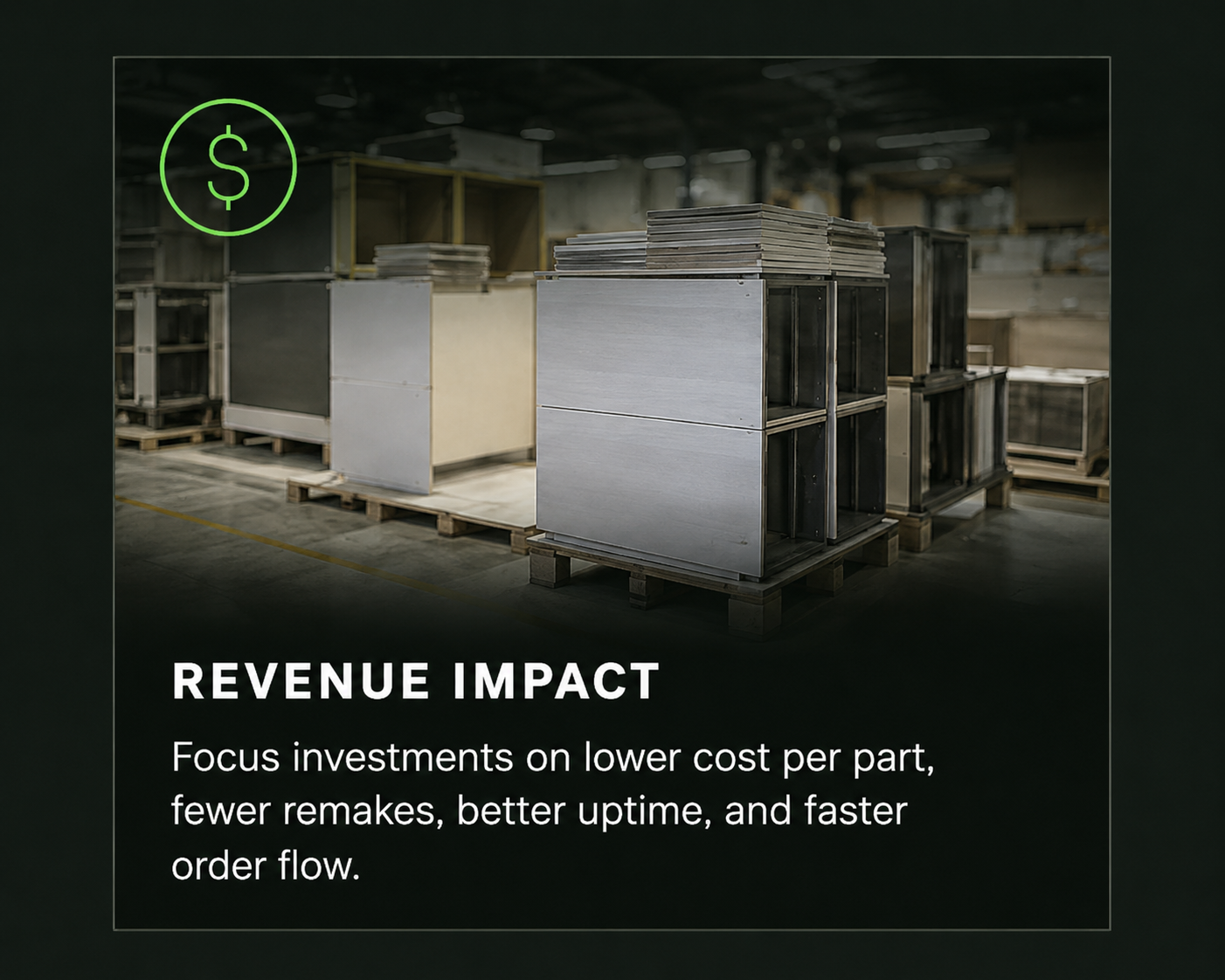
Revenue ImpactFocus investments on lower cost per part, fewer remakes, better uptime, and faster order flow.
Ready to Build a High-Performance Cabinet Shop?
Titan Equipment & Tooling Sales helps cabinet manufacturers plan, equip, service, and scale production systems. Whether you are upgrading a single workstation or designing a larger production flow, we can help you select machinery, tooling, handling systems, and service support that match your real operating goals.
Machine PlanningDesign a machine path that supports today’s jobs and tomorrow’s growth.
Tooling SupportMatch tooling to materials, machines, finish requirements, and production volume.
Service-Backed GrowthBuild around uptime, maintenance access, operator confidence, and long-term support.
Premium MachineryIndustrial equipment selected for real cabinet and panel-processing environments.
Tooling ExpertiseSupport for saw blades, CNC tooling, drilling, edge processing, and finishing prep.
Layout StrategyMachine planning that considers labour, flow, bottlenecks, and future expansion.
Service SupportInstallation, technical support, maintenance planning, and production continuity.
Built for Cabinet MakersSolutions designed around real shop floors, real operators, and real production pressure.
 SCM Easy Store